
A B&D garage door that starts moving unevenly, lifting higher on one side, or sitting crooked usually has a mechanical lifting, balance, or alignment fault. The main areas to investigate are the spring system, lifting cables, rollers, tracks or guides.
Uneven movement should not be treated as a cosmetic issue. Once the two sides of the door stop moving together, the door can bind, twist, leave its normal track or guide position, or place extra load on the opener.
If the door is visibly crooked, a cable is loose, or one side is rising much faster than the other, stop operating it until you identify the cause.
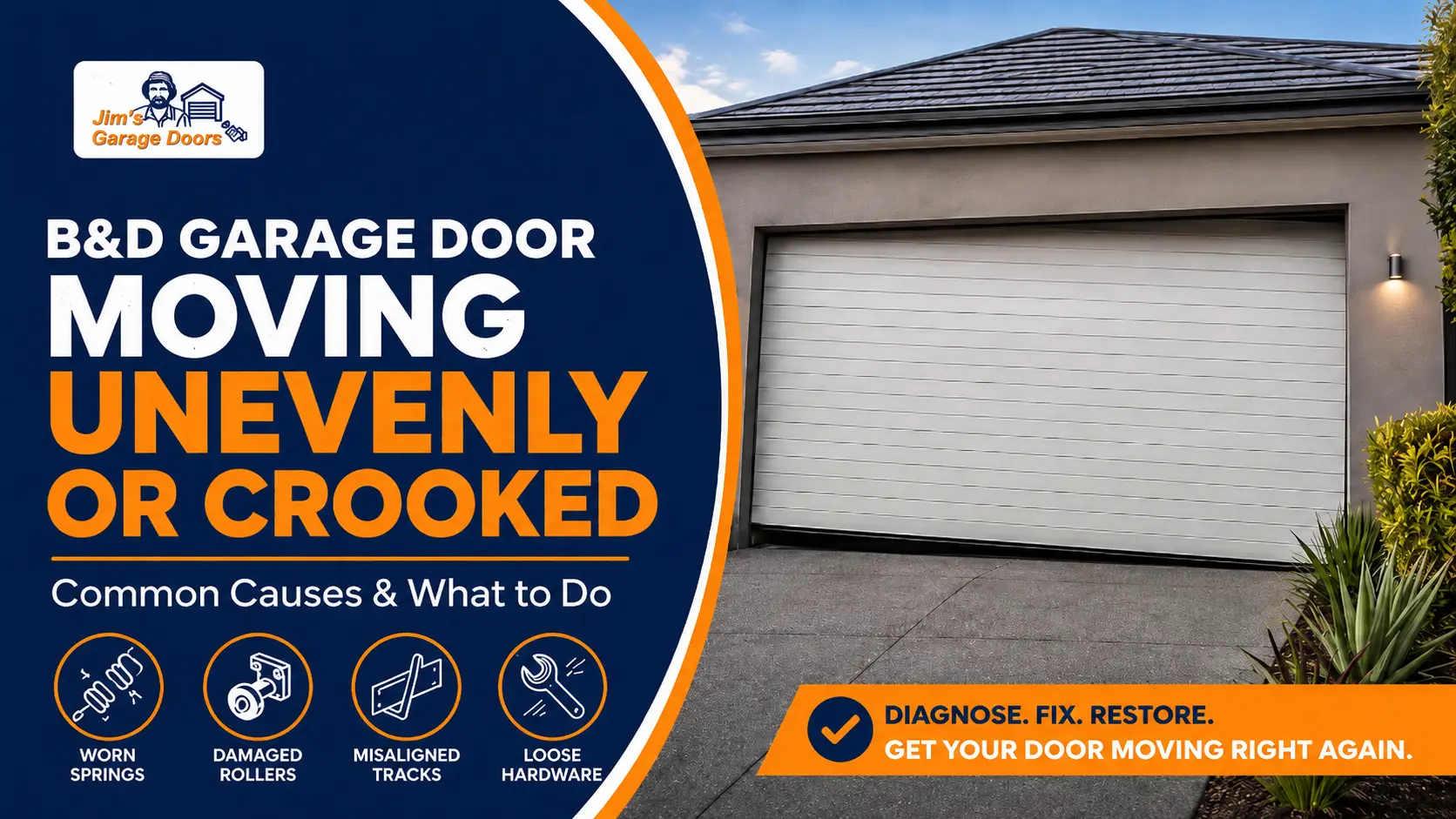
What Does an Uneven or Crooked B&D Garage Door Usually Point To?
An uneven B&D garage door usually points to unequal lifting force or unequal resistance between the two sides of the door.
| What the Door Is Doing | More Likely Cause | Best Action |
|---|---|---|
| One side rises before the other | Cable or lifting-system fault | Stop repeated operation |
| Door sits lower on one side | Cable tension or alignment issue | Arrange inspection |
| Door twists while opening | Cable, spring, roller or track fault | Stop using the door |
| Door pulls sideways | Track clearance or alignment problem | Have the movement checked |
| Door jams at one point | Roller or track resistance | Do not force it |
| Roller has left the track | Track, roller or cable fault | Stop immediately |
| Door opens crooked after a loud bang | Possible spring failure | Arrange urgent inspection |
Why Is One Side of My B&D Garage Door Lifting Higher Than the Other?
Uneven lifting matters because it can quickly become an open or close failure. If the door becomes crooked, binds or leaves its guides, stop operating it. For a more focused diagnosis, see our guide to B&D garage doors moving unevenly or sitting crooked.
On a sectional door, the main areas to inspect are:
- lifting-cable tension;
- damaged or displaced cables;
- cable drums;
- spring balance;
- rollers or tracks creating resistance on one side.
B&D Panelift troubleshooting information identifies unequal lifting-cable tension as a cause of a door not sitting level, while cable-drum and track conditions can also influence side-to-side movement.
Do not keep cycling the door to see whether it straightens itself. Uneven lifting usually has a mechanical cause that needs to be found.
Can a B&D Garage Door Spring Make the Door Crooked?
Yes. A damaged or failed spring can make a B&D garage door move unevenly because the door is no longer properly counterbalanced.
A spring fault becomes more relevant when:
- the door suddenly feels heavier;
- movement becomes jerky;
- the opener starts straining;
- the door opened crooked after a loud bang;
- the fault appeared suddenly rather than gradually.
B&D identifies uneven or crooked opening as a possible sign of spring trouble and advises against DIY spring repair.
If the door has become unusually heavy as well as uneven, inspect the spring system before blaming the opener.
What Most Homeowners Get Wrong About a Crooked Door
A crooked garage door is often treated as a track problem first, but the track may only be showing the effect of a lifting imbalance.
If a cable or spring is no longer carrying the door correctly, one side can be pulled ahead of the other. That unequal load then makes the rollers rub or bind in the tracks.
Adjusting the track before identifying the lifting fault can leave the actual cause unresolved.
Can a Loose or Damaged Cable Cause a B&D Door to Lift Unevenly?
Yes. A cable fault can make one side of a sectional door rise differently because the cables transfer lifting force to both sides of the door.
Signs that point more strongly to a cable problem include:
- a loose or hanging cable;
- one side of the bottom panel rising first;
- the door sitting crooked while partly open;
- a cable displaced from its drum;
- visibly different cable tension from side to side.
B&D Panelift troubleshooting information links loose or unequal lifting cables with level and movement faults.
Do not attempt to re-tension or re-seat the cable yourself. The cable system works together with the springs and loaded hardware.
Jim’s garage door repair guidance also notes that loose, frayed or snapped cables can make a door hang unevenly or leave one side unsupported.
Can Misaligned Tracks Make a B&D Garage Door Move Crooked?
Yes. Misaligned or damaged tracks can make one side of the door encounter more resistance than the other, causing the door to pull sideways, scrape or jam.
Look for:
- a roller rubbing hard against one side;
- a visibly bent track;
- different roller clearance from left to right;
- a door panel scraping during travel;
- one side hesitating while the other continues moving.
B&D identifies track misalignment as a cause of sectional doors becoming difficult to operate and recommends professional realignment where adjustment is required.
If track damage or an off-track condition is already visible, the issue has moved beyond basic troubleshooting.
Can Worn Rollers Make a B&D Sectional Door Move Unevenly?
Yes. Worn or damaged rollers can create unequal friction in the tracks, causing one side of a sectional door to hesitate or bind.
A roller fault becomes more likely when:
- the door sits reasonably level at rest;
- uneven movement starts only at a certain height;
- one roller appears damaged or worn;
- scraping or grinding occurs on one side.
This distinction matters: cables and springs affect how the door lifts, while rollers and tracks affect how that lift is guided.
Why Does My B&D Garage Door Sit Crooked When Closed?
A B&D garage door that sits lower on one side when closed usually has a cable-tension, levelling or alignment problem.
Possible causes include:
- unequal cable tension;
- cable-drum position;
- track alignment;
- hardware movement;
- the door or opening being out of level.
B&D Panelift troubleshooting material specifically associates a door not sitting level with unequal cable tension.
If the difference appeared suddenly, stop using the door until the lifting system has been checked.
What If My B&D Garage Door Moves Sideways as It Opens?
A B&D door that drifts toward one side during opening usually has unequal clearance, track alignment or lifting-system geometry.
Sideways movement can add load to:
- rollers;
- hinges;
- tracks;
- cables;
- opener connection points.
B&D troubleshooting documentation links side movement with clearance and cable-drum conditions.
Correct the door before sideways travel develops into binding or an off-track condition.
Can a B&D Roller Door Also Move Unevenly?
Yes. A B&D roller door can move unevenly when the curtain, side guides or spring balance are not operating evenly across the opening.
For a roller door, keep the visual check simple:
- Does one side rise first?
- Is the curtain rubbing heavily in one guide?
- Is there visible guide damage?
- Does the curtain pull sideways?
Do not adjust roller-door spring tension yourself.
What If the B&D Door Has Come Out of Its Track or Guide?
If a B&D garage door has come partly or completely out of its track or guide, stop operating it immediately.
B&D advises against lifting a door back onto its guide rails because spring or cable damage may also be involved.
Do not:
- force the door with the opener;
- pull the door straight manually;
- re-seat rollers while the door is loaded;
- loosen spring or cable hardware.
A door that has left its normal track or guide position is an unstable mechanical repair, not a DIY alignment job.
Is an Uneven B&D Door an Opener Problem?
Usually not as the first diagnosis. If the door is physically crooked or one side lifts differently, check the mechanical door before the opener.
If the door has progressed from uneven movement to refusing to complete an opening or closing cycle, use our broader B&D garage door won’t open or close troubleshooting guide to determine whether the mechanical fault is now preventing normal operation.
The opener applies force to the whole door. It does not independently control the left and right sides of a correctly functioning system.
Inspect the door mechanism first when there is:
- unequal lifting;
- visible tilt;
- cable movement;
- roller binding;
- track damage;
- spring imbalance
If the door is level, balanced and moving freely but automatic operation is still failing or the motor is stalling, investigate the B&D garage door opener as a separate fault.
What Can I Safely Check on an Uneven B&D Garage Door?
You can safely make visual observations, but do not adjust springs, cables, drums, or loaded track hardware as a DIY repair.
Reasonable checks include:
- Compare the left and right sides of the door.
- Look for a visibly loose or hanging cable.
- Confirm rollers are still sitting in the tracks.
- Look for obvious track or guide damage.
- Note whether the door becomes crooked immediately or later in travel.
- Listen for scraping or binding on one side.
- Stop operating the door if movement becomes unstable.
These checks describe the fault, not alter the loaded mechanism.
When Should I Stop Using a B&D Door That Is Moving Crooked?
Stop using the door when the uneven movement is significant, worsening or associated with a spring, cable, track or guide fault.
Arrange professional inspection if:
- one side rises noticeably before the other;
- the door is visibly tilted;
- a cable is loose, frayed or detached;
- a spring appears broken;
- the door twists during movement;
- a roller has left the track;
- the door has slipped from its guide;
- the opener is straining against the crooked door;
- the door drops or moves unpredictably.
At that point, continued operation can spread the fault into rollers, tracks, panels or the opener.
What Should a Technician Check on a Crooked B&D Garage Door?
A technician should determine why the left and right sides are no longer moving together before adjusting or replacing parts.
A practical sequence is:
- Check whether the door is level at rest.
- Compare cable tension.
- Inspect cable condition and drum position.
- Check spring balance.
- Inspect rollers and hinges.
- Check track or guide alignment.
- Observe exactly where the uneven movement starts.
- Test for binding under controlled manual movement.
- Check the opener load after assessing the door mechanism.
- Correct the imbalance and test full travel.
The repair should address the cause of the uneven movement, not just make the door look straight temporarily.
B&D Garage Door Still Moving Unevenly or Sitting Crooked?
If the door is still lifting unevenly after obvious obstructions have been ruled out, the next step is to identify whether the fault is in the spring, cable, roller, track, guide or balance system.
Jim’s Garage Doors can diagnose uneven B&D garage door movement and repair the mechanical fault causing the two sides to move differently.
Stop using the door and arrange an inspection if it is visibly crooked, has a loose cable, has left its track or guide, or becomes more uneven with each cycle.