

Jim’s Garage Doors provides garage door repairs in Burwood NSW for roller doors, sectional garage doors, tilt doors and automatic garage door systems.
We fix broken springs, damaged cables, tracks, rollers, heavy or crooked doors, roller door faults, and garage door openers that aren’t working correctly.
Burwood includes established residential streets, attached housing and higher-density properties around the town centre, so garage-door configurations can vary considerably between homes.
Most common mechanical and automatic garage door faults can be diagnosed and repaired without replacing the complete door.
The first step is identifying whether the problem comes from the door, spring system, cables, tracks or automatic opener.
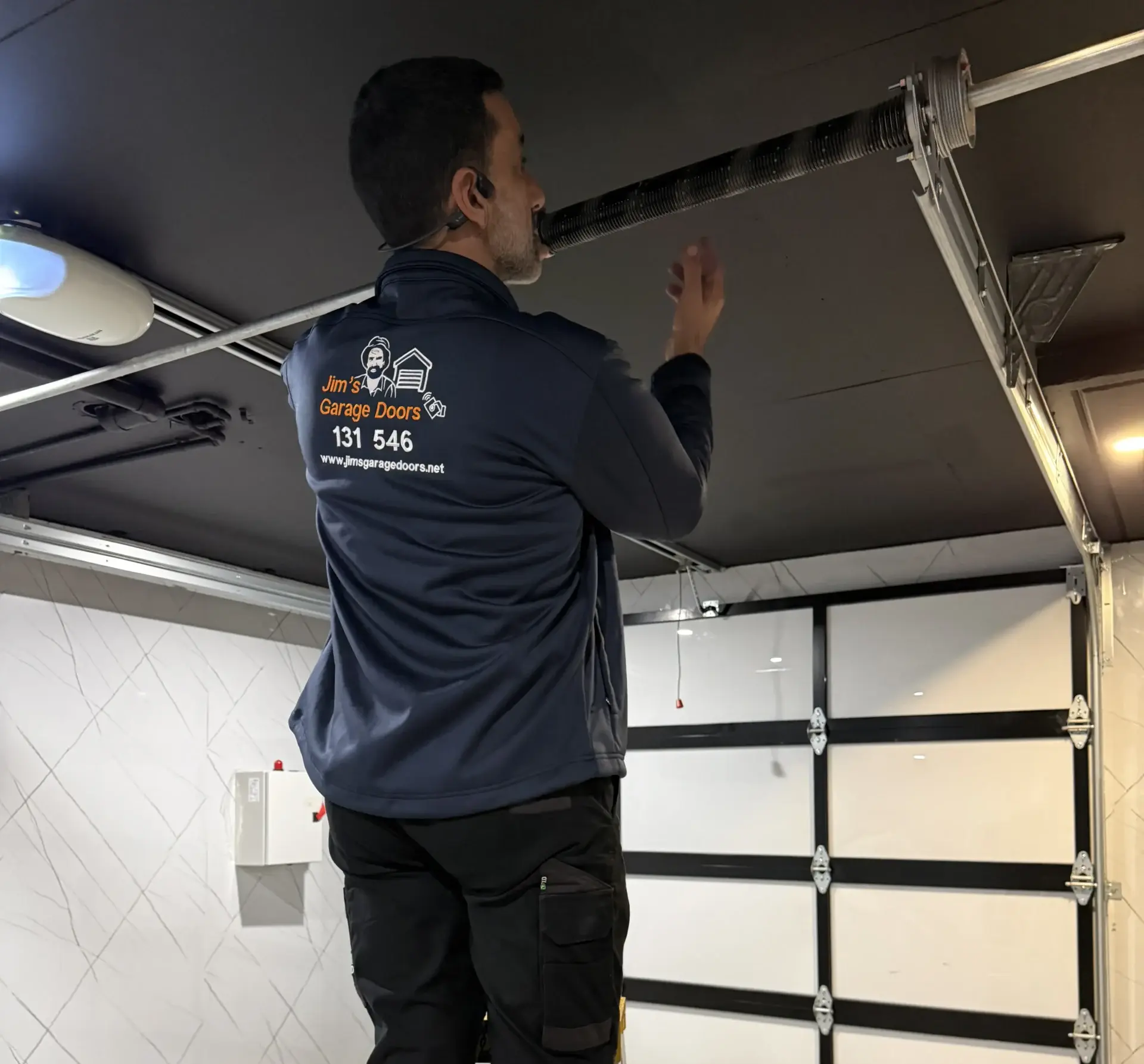
A garage door that suddenly becomes unusually heavy can have a spring or counterbalance problem.

A broken or displaced cable can affect how evenly the garage door lifts and supports its weight.

A roller leaving the track, displaced track or alignment problem can cause a garage door to move unevenly or become crooked.
A symptom does not always identify the failed part.
An opener that sounds strained may be trying to move a poorly balanced door rather than suffering from a motor fault.
Yes. The garage layout, door type and available access can affect how the fault is inspected and repaired.
Burwood has a mix of established homes, attached dwellings and apartment-style properties. This means a technician may encounter older roller or tilt doors, modern sectional doors, retrofitted openers or garages accessed through shared or basement areas.
Mention if the garage is accessed through a rear lane or has restricted driveway clearance.
Provide details if the garage is inside basement parking or requires security or building access.
Mention when a failed garage door is preventing a vehicle from leaving the garage.
The repair should still focus on the mechanical or automatic fault, not the property type.
Providing access information simply helps the repair visit to be planned around the actual garage configuration.
A garage door that suddenly becomes heavy usually needs its spring or counterbalance system checked.
Don’t assume the automatic opener is the cause until you’ve assessed the door’s mechanical balance.
A heavy door can place additional load on the opener.
An opener can sometimes continue moving an increasingly heavy door for a period of time, placing additional load on the motor and drive system.

Garage Door Spring Repairs Burwood
Door balance and the spring system should be checked before an automatic opener is assumed to be responsible.
A crooked garage door usually means the two sides of the door are no longer lifting or travelling evenly.
Continued operation can worsen cable, roller or track damage.
A cable can come off a drum or become broken or damaged.
A roller can leave the track or the track can become bent or displaced.
A door obstruction or spring and balance fault can cause uneven movement.
| Garage Door Situation | Recommended Action |
|---|---|
| One side is visibly lower | Stop using the door. |
| A cable is hanging loose | Stop operation and arrange an inspection. |
| A roller has left the track | Keep the door out of use until inspected. |
| The door twists while moving | Have the underlying cause diagnosed before further use. |
Yes. Many residential roller door faults can be repaired after the curtain, guides, spring system and opener have been checked together.
Common roller door problems include:
A weak-looking motor is not always the real problem.
If the roller door is poorly balanced or binding in its guides, the opener may simply be struggling against excessive resistance.
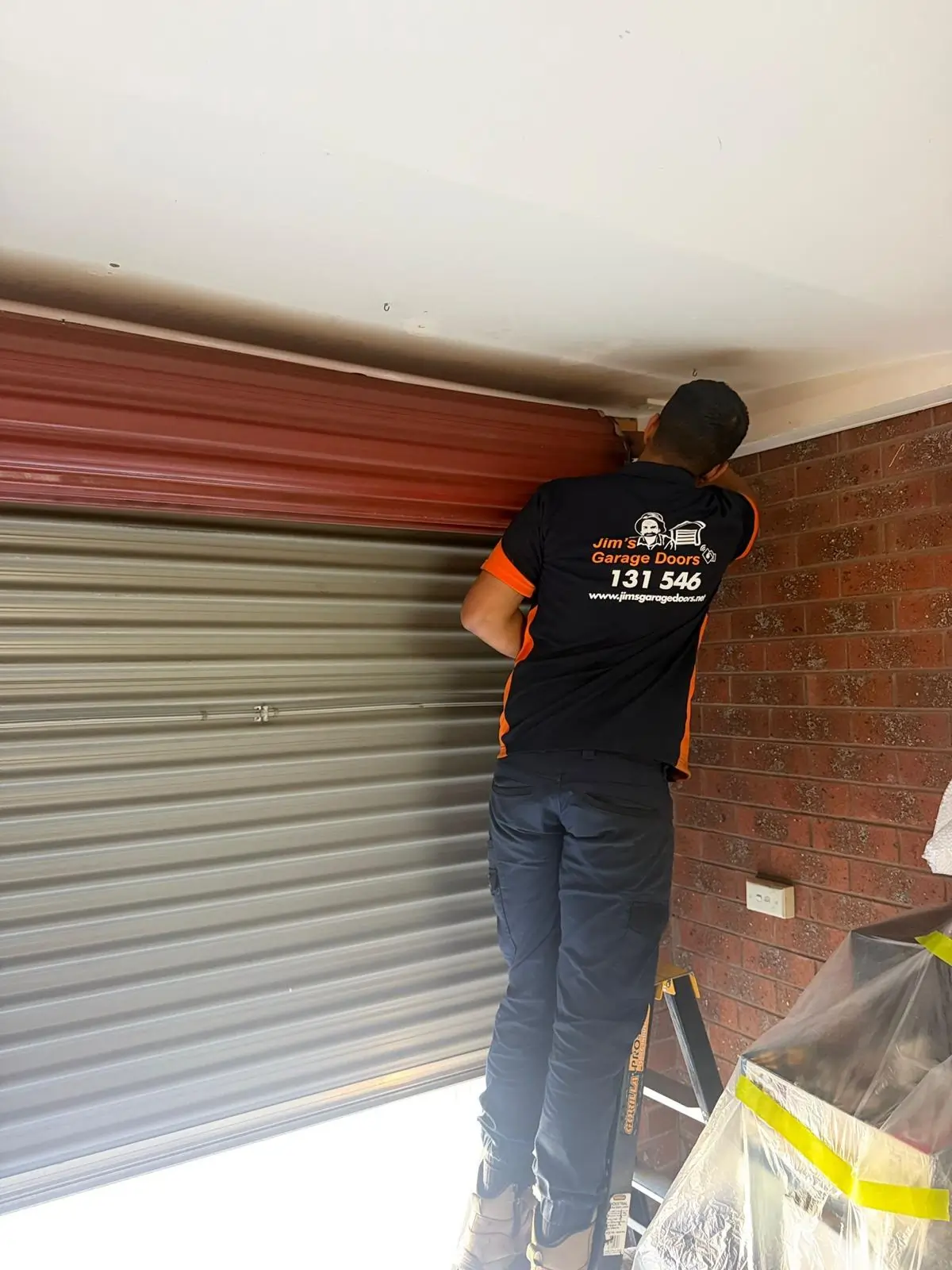
Roller Door Repairs Burwood
The curtain, guides, spring system and automatic opener can be checked together to identify the source of the fault.
Diagnose automatic garage door problems by checking the mechanical door and the opener separately.
This helps distinguish an electrical or control fault from a heavy, resistant or misaligned door.
Safety sensors where fitted can affect whether the garage door closes correctly.
Travel and limit settings may need checking when the door stops or reverses.
Remote, receiver, battery or opener controls may be involved when operation is intermittent.
The opener motor and drive system can be assessed after mechanical resistance has been ruled out.
The aim is to identify the source of the fault rather than replacing the opener unnecessarily.
A heavy, obstructed or mechanically restricted garage door can make the opener appear to be the source of the problem.
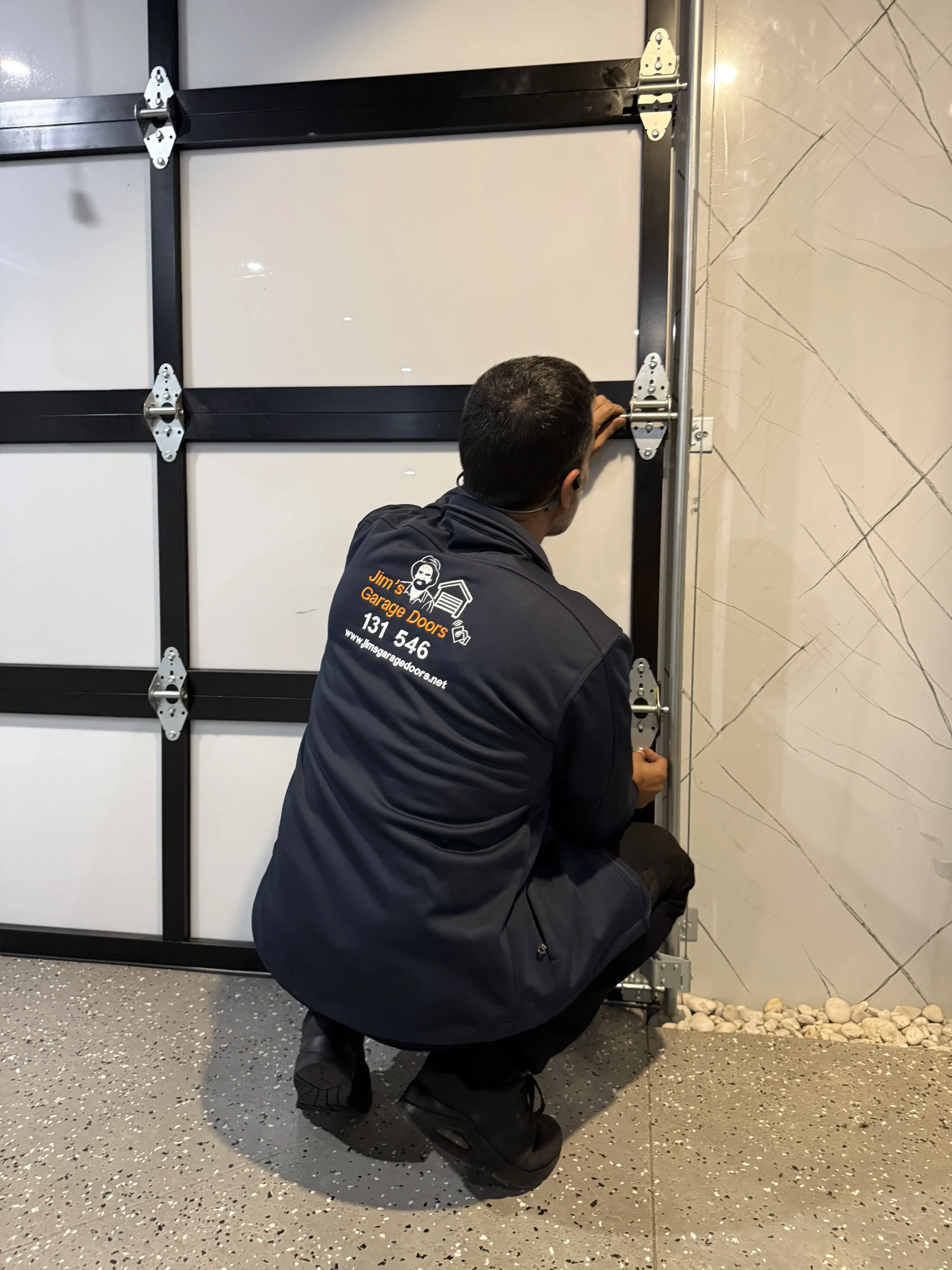
Diagnosis Before Repair
The door, spring system, cables, tracks and opener are assessed before the required repair is determined.
A proper diagnosis checks the door as a complete mechanical and automatic system before deciding which component needs repair.
Door position and movement
Door balance
Springs and cables
Rollers and tracks
Automatic opener
Controls and safety systems
Repair usually makes sense when the main door remains serviceable and the fault is limited to components such as springs, cables, rollers, tracks or the opener.
Age alone does not determine whether you should replace a garage door.
The decision should be based on condition, compatibility and the extent of the fault.
Keep the garage door in the safest available position and avoid dismantling springs, cables or other loaded components.
Accurate fault and access information makes the repair visit easier to plan.
Jim’s Garage Doors can assess common residential roller, sectional, tilt and automatic garage door systems in Burwood.
Repairs may involve the curtain, guides, spring system, axle or opener.
Common repair areas include springs, cables, rollers, tracks, hinges and automatic openers.
Faults may involve counterbalance hardware, door alignment and opener systems.
Problems can involve motors, remotes, receivers, limits, safety sensors, or the mechanical door operation.
Jim’s Garage Doors provides garage door repair services across Burwood and surrounding parts of Sydney’s Inner West.
Yes.
Jim’s Garage Doors provides garage door repairs in Burwood for common residential roller, sectional, tilt and automatic garage door systems.
Repairs may involve springs, cables, rollers, tracks, alignment faults and garage door openers.
Yes, depending on the cause.
A door that will not open may have a spring, cable, opener, locking or mechanical resistance problem.
The fault should be diagnosed before deciding which component needs repair.
A broken garage door spring normally needs to be replaced rather than repaired.
The replacement spring should suit the weight and counterbalance requirements of the door.
Stop operating the door and arrange an inspection.
A cable, roller, track, drum or spring problem can cause one side of the garage door to move differently from the other.
Many opener faults can be repaired depending on the failed component, condition of the opener and availability of compatible parts.
The mechanical door should also be checked because a heavy or resistant door can overload the opener.
Yes.
Roller door repairs can involve springs, guides, the curtain, alignment, axle components and automatic openers.
The complete roller door system should be checked to determine why it is sticking, becoming heavy or operating unevenly.
An older garage door does not automatically need replacement.
If the main door remains structurally sound and compatible components are available, repairing springs, cables, rollers, tracks or the opener may remain practical.
Arrange an inspection if your garage door is stuck, unusually heavy, crooked, noisy, off track or failing to open and close automatically.
Enter your postcode to check local technician availability. We service and repair all garage door brands.