
Jim’s Garage Doors provides garage door repairs in Turramurra NSW 2074, covering broken springs, snapped cables, faulty motors, damaged tracks, worn rollers and garage doors that will not open or close.
Our technicians assess roller, sectional, panel lift and tilt garage doors to identify the cause of the failure before recommending repairs. Whether the problem involves the lifting mechanism, door alignment or automatic opener, the priority is to restore safe, reliable operation without replacing serviceable components unnecessarily.
Jim’s Garage Doors repairs mechanical and automatic garage door faults, including damaged springs, lifting cables, rollers, tracks, panels, motors and controls. The technician checks the affected components and surrounding mechanism to establish the correct repair.
Broken or incorrectly tensioned springs can leave a garage door unusually heavy, difficult to lift or completely inoperable. The technician identifies the spring system, checks the counterbalance arrangement and fits a correctly specified replacement where appropriate. The door’s balance is then tested before normal operation resumes.
A damaged lifting cable can leave a sectional door crooked, jammed or unsupported on one side. The technician secures the door, examines the cables, drums and attachment points, and replaces damaged components. The underlying cause of cable displacement is checked before testing the repaired lifting system.
Worn rollers, bent tracks and loose hinges can cause scraping, uneven movement or jamming. The technician identifies where the door binds, checks track alignment and mounting hardware, and repairs or replaces the affected components. The door is then tested through its operating range to confirm smooth travel.
Roller doors can develop curtain, guide, axle or spring faults, while tilt doors may experience problems with pivot arms, springs and mounting hardware. The technician inspects the relevant lifting arrangement and determines whether worn components can be replaced without replacing the complete door.
An automatic garage door that stops, reverses or fails to respond may have an opener, control or mechanical fault. The technician assesses the motor drive, controls, safety sensors where fitted, and door movement before deciding whether the existing opener can be repaired or requires replacement.
A dented or distorted panel may interfere with hinges, rollers and overall door alignment. The technician checks the extent of damage and whether a compatible replacement section is available. Individual panel replacement may be possible when the remaining door structure is sound.
A heavy garage door may have a failed spring, a crooked door may have a lifting cable or alignment problem, and a door that stops during travel may have mechanical binding or an opener fault. These symptoms indicate where the technician should investigate, but do not confirm the failed component.
| Garage Door Symptom | What the Technician Investigates |
|---|---|
| Door suddenly feels heavy | Springs, counterbalance system and mechanical resistance |
| Door lifts unevenly | Cables, drums, rollers and track alignment |
| Door scrapes or jams | Track damage, roller wear, hinges and panel distortion |
| Motor runs but door stays still | Drive mechanism, disengagement and mechanical faults |
| Door reverses before closing | Obstructions, safety sensors, travel settings and door resistance |
Stop operating a door with a visibly broken spring, loose cable or unstable position. Do not force the door or attempt to adjust high-tension components. Arrange a professional inspection before further use.
Contact Jim’s Garage Doors to arrange a fault inspection in Turramurra.
A technician determines the repair by checking the door’s mechanical condition before attributing the problem to the opener. This avoids replacing a functioning motor when the actual fault involves springs, cables, tracks or door balance.
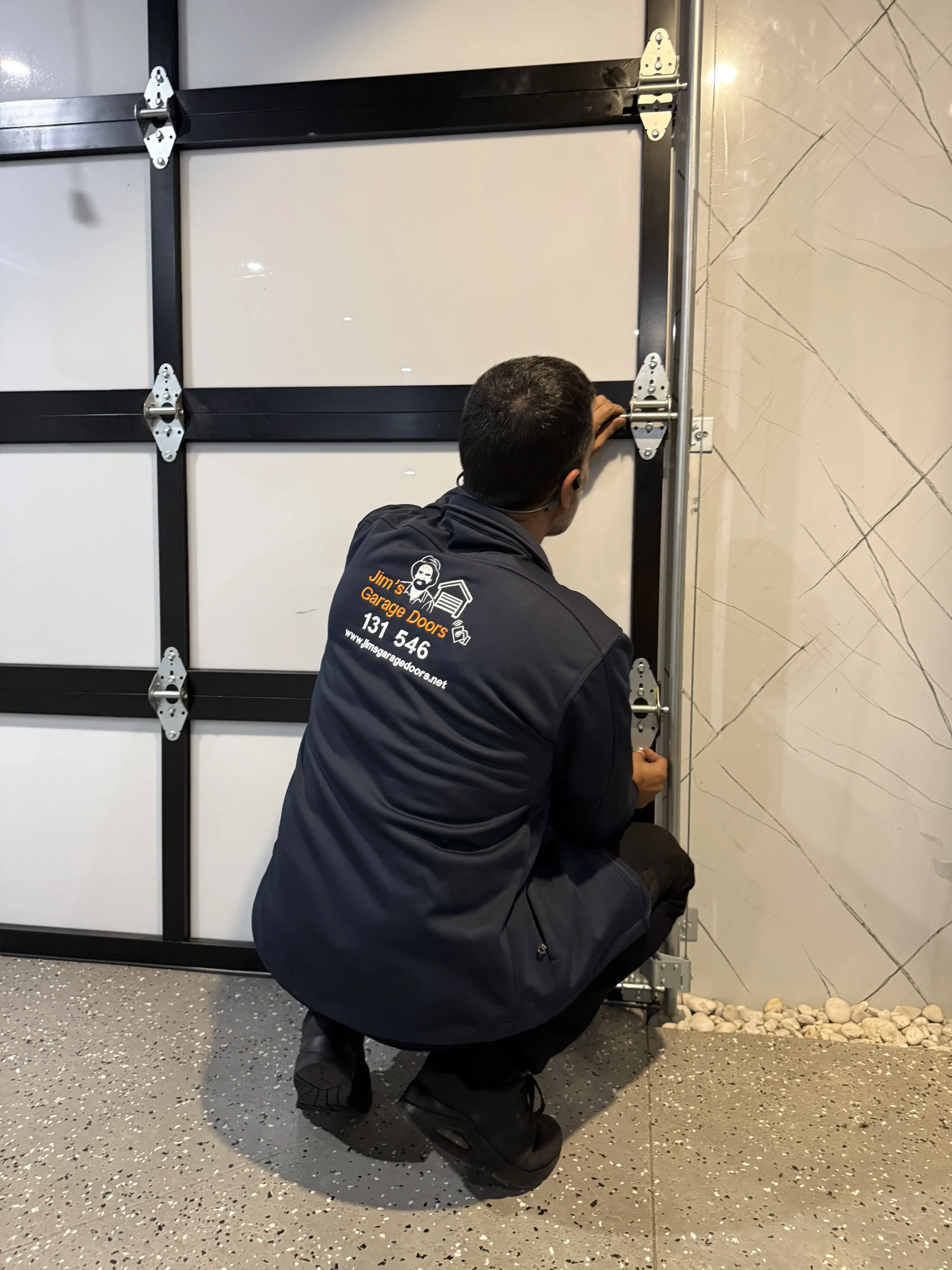
The technician checks the door’s position, spring arrangement, cables, tracks, brackets and visible damage. If the door is crooked or unsupported, it must be stabilised before further testing.
Where safe, the technician assesses the door’s movement independently of the opener. Excessive lifting weight can indicate a spring or balance problem, while resistance at a particular point may direct attention to the rollers, tracks or door panels.
If the mechanical system is serviceable, the technician checks the opener drive, control inputs, travel settings and safety devices as applicable to the model. An opener that operates without moving the door requires a different investigation from one that stops under excessive load.
The technician repairs or replaces the defective components using parts suitable for the door system. Related hardware and alignment are checked to avoid leaving the original cause of the failure unresolved.
After the repair, the technician checks door travel, balance, alignment and consistent operation. Automatic systems also require appropriate travel and safety-function testing according to the manufacturer’s instructions.
An automatic garage door may stop or reverse because of excessive mechanical resistance, an obstruction, safety sensor problems, incorrect travel settings or a defective opener. The technician distinguishes between these causes before adjusting or replacing the motor.
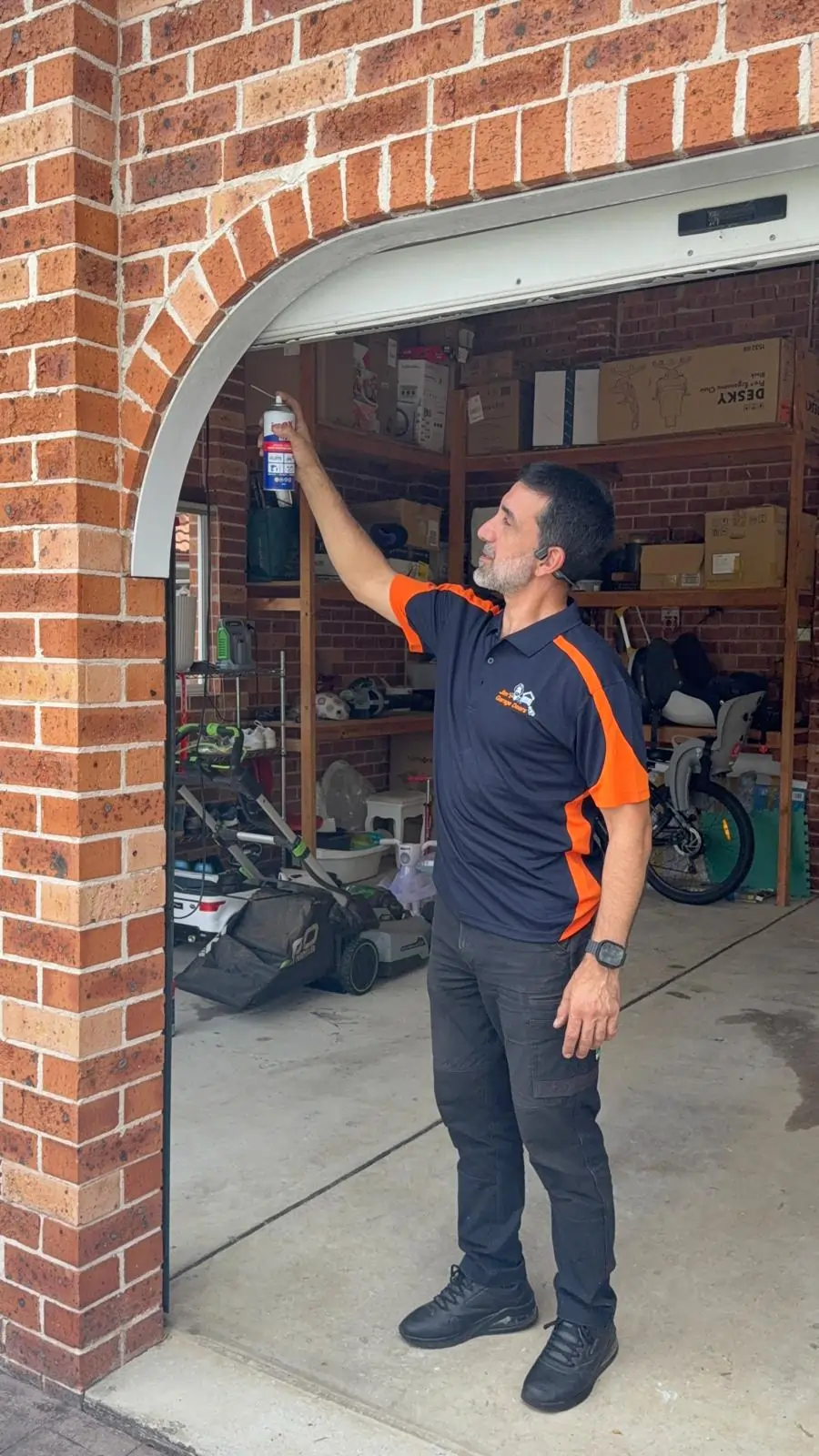
An uneven closing gap can result from door misalignment, damaged lifting components or an uneven garage threshold. The technician checks whether the door is travelling crookedly or closing squarely against a sloping surface.
This distinction is relevant when assessing garages with inclined driveways, altered paving or older concrete thresholds, including properties in Turramurra.
The technician examines whether the door travels evenly through its tracks, whether its bottom edge is level and whether damaged lifting components are affecting the closing position.
If the door is moving out of alignment, the relevant tracks, cables, rollers or supporting hardware must be assessed before corrective work.
A sectional door may travel correctly through its tracks but leave a gap beneath one corner because the garage floor is not level.
If the door is correctly aligned, track adjustment may not solve the problem. A suitable bottom seal or threshold treatment may be more appropriate.
Where water enters because of driveway grading or drainage, separate drainage work may be necessary. The technician identifies whether the problem originates from the door or surrounding opening before recommending adjustments.
Older tilt and sectional garage doors can often be repaired when their structures remain sound and compatible replacement components are available. Replacing the entire door is not automatically necessary because a spring, hinge or pivot component has failed.
For tilt doors, the technician examines the pivot arms, spring attachments, mounting brackets and door frame. If the lifting mechanism remains serviceable, compatible worn parts may be replaced.
Severely damaged mounting points, distorted operating hardware or unavailable components can change the repair recommendation.
For sectional doors, the assessment covers panel condition, hinge mounting points, rollers, tracks and the counterbalance system.
Damaged individual components may be replaced where compatible parts are available and the remaining door structure is suitable for continued use.
Where an older garage has restricted headroom or side clearance, the technician considers whether a proposed replacement door can fit the existing opening. Severe structural damage, unsafe mounting points or unavailable compatible parts may make replacement more appropriate.
Repair is generally preferable when the door structure is sound, the fault affects replaceable components and the repaired mechanism can operate safely. Replacement becomes more appropriate when structural damage, component incompatibility or extensive deterioration makes continued repair impractical.
| Technician’s Finding | Recommended Approach |
|---|---|
| Broken spring or cable; door otherwise sound | Replace the defective lifting components |
| Worn rollers or damaged track section | Repair or replace affected hardware |
| Faulty opener; door mechanically serviceable | Repair or replace the opener |
| Individual damaged panel; compatible part available | Consider panel replacement |
| Severe structural distortion or multiple major failures | Assess complete door replacement |
The technician considers the condition of the entire system, not just the component that has visibly failed. A targeted repair may restore a sound door, while extensive structural damage may justify replacement.
Garage door repair costs depend on the failed components, door type, extent of damage, labour requirements and parts availability. An accurate quote may require an on-site inspection, particularly when the cause of the problem is not visible.
A damaged cable may require additional repairs if the drum, bracket or door alignment has also been affected. Older or specialised mechanisms may require components that are not readily available.
The type and condition of the garage door, accessibility of the mechanism and extent of related damage can affect the work required to restore safe movement.
Tell the booking team whether the door is a roller, sectional or tilt door, explain the problem and when it occurred, and mention whether the door is stuck open, closed or partially raised. Include the opener brand or model if known and photographs taken safely where available.
To arrange garage door repairs in Turramurra, call 131 546 or submit an online quote request. Explain the symptoms, door type and whether the garage is currently inaccessible or cannot be securely closed.
Explain whether the door is stuck, uneven, unusually heavy or no longer responding to its opener. Mention visible damage, a trapped vehicle or restricted garage access.
A local technician’s availability can be checked and an appointment arranged. Same-day availability depends on technician scheduling.
During the visit, the technician identifies the fault, explains the proposed repair and confirms the work required. Repairs can proceed once approved, provided the work can be completed safely and suitable parts are available.
Following the repair, the technician checks the door’s movement, alignment and applicable automatic safety functions. If specialised components are required, further arrangements may be necessary.
Explain the condition when booking so the access requirements and urgency can be assessed.
A garage door with a trapped vehicle may be repairable, but safe access depends on the fault and garage configuration. Tell the booking team whether there is another entrance or an external emergency-release mechanism. Do not force a damaged door open.
Yes, when a compatible panel is available and the remaining door structure is serviceable. The technician checks panel dimensions, hinge positions, reinforcement and alignment before recommending replacement.
Some manual roller, sectional and tilt doors can be fitted with an automatic opener. The technician first checks door balance, lifting components, mounting strength and opener clearance to confirm suitability.
The technician checks whether a suitable compatible component can be sourced. If the original part is discontinued and no safe alternative is available, replacing a larger assembly or the complete door may be necessary.
Jim’s Garage Doors Turramurra is listed at 10/1290 Pacific Hwy, Turramurra NSW 2074. Contact 131 546 to discuss your garage door problem and arrange an inspection, subject to technician availability.
Jim’s Garage Doors Turramurra
10/1290 Pacific Hwy
Turramurra NSW 2074
Australia
Contact Jim’s Garage Doors to enquire about repairs for roller, sectional, tilt and automatic garage doors in Turramurra.
Jim’s Garage Doors provides repairs for stuck, damaged and automatic garage doors, with technicians assessing the cause before recommending the required work.
Enter your postcode to check local technician availability. We service and repair all garage door brands.