

Garage Door Openers, Motors & Remotes
Jim’s Garage Doors installs, replaces, repairs and services garage door openers for roller doors, sectional doors and suitable tilt doors.
Whether your opener has stopped working, the motor has become noisy, your remote has been lost or you want to convert an existing manual garage door to automatic operation, the first step is checking the complete door and opener system.
The correct opener depends on the garage door type, size, weight, balance, movement and available installation space. The opener should work with the garage door rather than compensate for a damaged, unbalanced or difficult-to-move door.
Opener Installation
Motor Repairs
Motor Replacement
Remote Programming
Door + Opener Assessment
Quick Links
What Garage Door Opener Services Are Available?
Garage door opener work can involve installing a new opener,
repairing an existing system, replacing a failed motor or restoring
access through compatible remotes and controls.
The garage door itself should also be considered because springs,
cables, rollers, tracks, hinges and door balance can affect how an
automatic opener performs.
New Opener Installation
A compatible opener can be fitted to suitable roller, sectional
and tilt garage doors after the door condition and installation
space have been assessed.
Opener Repairs
Motor faults, remote problems, drive issues, travel problems,
control faults and other opener symptoms can be diagnosed before
deciding whether replacement is required.
Motor Replacement
An old, failed or unsuitable opener can often be replaced without
replacing the complete garage door, provided the existing door
remains suitable for automatic operation.
Remote Replacement
Lost, damaged or non-working remotes can be checked for
compatibility with the opener before a replacement handset is
programmed.
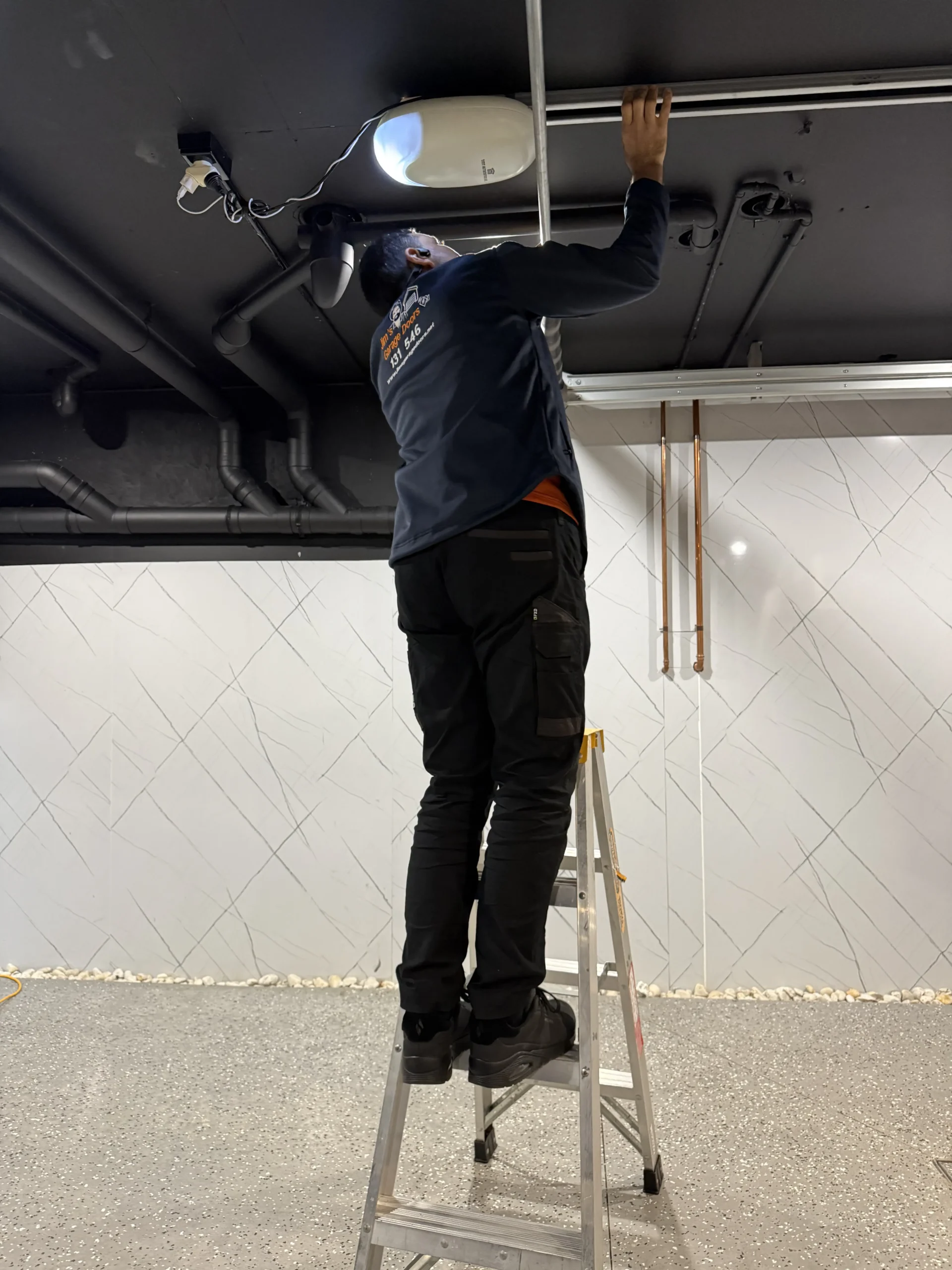
Can an Existing Manual Garage Door Be Made Automatic?
Yes. Many existing manual garage doors can be automated if
the door is in suitable working condition and a compatible opener is
available.
A manual door should open and close smoothly, remain properly
balanced and have sufficient side or ceiling space for the required
opener system.
If the door already binds, moves unevenly, feels excessively heavy
or has damaged lifting components, those mechanical problems may
need attention before automation.
What Should Be Checked Before Automation?
Door weight
Spring condition
Cable condition
Track alignment
Roller movement
Hinges and brackets
Side or ceiling clearance
Which Opener Suits a Roller, Sectional or Tilt Garage Door?
The correct opener depends first on how the garage door
moves. Roller doors, sectional doors and tilt doors use
different operating mechanisms and therefore require different
installation configurations.
| Garage Door Type | Typical Opener Configuration | Main Compatibility Checks |
|---|---|---|
| Roller Door | Side-mounted roller door opener | Door balance, curtain movement, door size and available side room |
| Sectional Door | Ceiling-mounted opener | Door size, panel weight, balance, tracks and ceiling clearance |
| Tilt Door | Compatible overhead tilt-door opener | Door weight, springs, pivot mechanism, arms and clearance |
Roller Door Openers
Roller garage doors roll around a drum above the opening. Compatible
motors are commonly mounted beside the roller door where sufficient
side room is available.
Door balance and smooth curtain movement should be checked before
automation.
Sectional Door Openers
Sectional garage doors use connected panels that travel vertically
and then along tracks beneath the ceiling.
Opener selection depends on the door size, weight, balance, rail
configuration and available ceiling space.
Tilt Door Openers
Tilt garage doors move as a single panel, so their opener must suit
the pivoting movement and weight distribution of the door.
Door arms, springs, balance and available clearance should be
checked before automation.
Is the Fault in the Garage Door Opener or the Garage Door?
An automatic garage door fault may come from the opener,
remote, receiver, safety system or the mechanical garage door
itself.
A motor fault should not automatically be assumed until the complete
system has been checked.
| What You Notice | Possible Area to Check | Recommended Action |
|---|---|---|
| Door will not open | Remote, power, opener, spring, cable or door balance | Assess the complete system |
| Motor runs but the door does not move | Drive system, manual release or garage door mechanism | Avoid repeated operation until checked |
| Door reverses unexpectedly | Resistance, tracks, balance, safety function or opener settings | Check for obstruction and investigate if persistent |
| Door moves unevenly | Cables, tracks, rollers, springs or alignment | Stop operation if movement appears unsafe |
| Remote does not operate the door | Remote, receiver, programming, power or opener | Check the control system |
| Door feels unusually heavy manually | Spring or balance system | Do not make the opener compensate for the door weight |
| Door stops part way | Mechanical resistance, balance or travel settings | Inspect before continued use |
| Automatic door is noisy | Rollers, hinges, tracks, opener or general wear | Service and diagnose the source |
The fault may be in the opener or the garage door mechanism, so the
complete system should be assessed.
Should a Garage Door Opener Be Repaired or Replaced?
The decision depends on what has failed and whether the
existing opener remains suitable for the garage door.
Not every opener problem requires replacement. A repair may be
practical where the fault is isolated and the existing opener and door
remain serviceable.
Opener Repair May Be Considered When
- The fault is isolated to a repairable opener component
- The opener remains suitable for the garage door
- The garage door itself is mechanically sound
- The control or drive system can be restored
- The opener can continue to operate reliably after repair
Opener Replacement May Be Considered When
- The existing motor has failed
- The opener is old or unreliable
- Compatible replacement remotes are an issue
- The opener is no longer suitable for the door
- A compatible replacement system is more appropriate
Replacing the opener does not necessarily mean replacing the garage door.
In many cases, the motor or opener can be replaced while the existing garage door remains in service. The door should first be checked for suitable balance, movement and mechanical condition.
Can a Lost or Broken Garage Door Remote Be Replaced?
Yes, a lost, damaged or non-working garage door remote can
often be replaced when a compatible handset is available for the
existing opener.
Not every remote works with every garage door opener. Compatibility
depends on the opener brand, model, frequency and coding system.
Replacement Remotes
The opener should be identified before choosing a replacement
handset so the remote matches the required system.
Remote Programming
Compatible remotes can be programmed to the opener so the control
system communicates correctly with the receiver.
Other Controls
Depending on the opener system, controls may include handheld
remotes, wall buttons, keypads or compatible smart-access functions.
The correct remote depends on the opener brand, model, frequency and coding system. Rolling-code systems also require compatible controls.
How Is the Right Garage Door Opener Selected?
The correct opener is selected around the garage door rather
than by motor features alone.
Door type, size, weight, movement, balance and available installation
space determine which opener configuration can be used. Features and
control options can then be considered after compatibility has been
established.
Opener Selection Checks
Door size
Door weight
Door balance
Operating movement
Side or ceiling space
Remote requirements
Compatible opener functions

How Do Common Garage Door Opener Types Compare?
Different garage doors and installation layouts use different opener
configurations. Drive type is one consideration, but it should not be
assessed separately from door compatibility.
| Opener Type | Common Application | Main Considerations |
|---|---|---|
| Side-Mounted Roller Opener | Roller garage doors | Side clearance, door size, balance and smooth curtain movement |
| Belt-Drive Opener | Compatible sectional doors | Quieter operation, rail configuration and ceiling space |
| Chain-Drive Opener | Compatible sectional or tilt doors | Drive configuration, lifting requirements and operating noise |
| Smart-Compatible Opener | Compatible automatic garage door systems | Opener compatibility, connectivity and available control system |
Which Garage Door Opener Features Matter?
Opener features should be considered after the motor has been
matched correctly to the garage door.
Available functions vary between opener systems and models, so the
required features should be confirmed when selecting the opener.
Safety Reverse
Compatible systems may include functions intended to stop or reverse
door movement when an applicable obstruction condition is detected.
Soft Start & Stop
Some openers vary motor movement at the beginning and end of travel
to provide smoother operation.
Remote Access
Compatible handheld remotes, wall controls and keypads can provide
different ways to operate the garage door.
Rolling Code
Some opener systems use rolling-code technology that changes the
transmitted access code during operation.
Courtesy Lighting
Some garage door openers include lighting that activates when the
opener is operated.
Battery Backup
Battery backup may be available on compatible opener models,
depending on the selected system and setup.
Smart Control
Some opener systems can support compatible smart-access functions
for monitoring or operating the garage door.
Manual Release
The manual release is part of the opener system and should be
checked during installation and operational testing.
Does Garage Door Opener Brand and Model Matter?
Yes. The opener brand and model matter when identifying
compatible remotes, controls, parts and replacement options.
Jim’s Garage Doors works with a range of garage door opener brands and
motor types. The appropriate opener should still be selected according
to the garage door type, size, condition and required functions rather
than choosing a motor by brand alone.
Identify the Existing Opener
The brand and model can help determine remote compatibility and what
repair or replacement options may be available.
Check Door Compatibility
A replacement opener still needs to suit the door type, size,
weight, movement and mounting space.
Then Compare Functions
Remote controls, drive configuration, lighting, smart access and
other features can be considered after compatibility is confirmed.
What Happens During Garage Door Opener Installation?
Garage door opener installation starts by assessing the
garage door before the motor is fitted.
This establishes whether the existing door is mechanically suitable
and what type of opener can operate it correctly.
What Affects the Cost of a Garage Door Opener?
Garage door opener cost depends on the opener required, the
garage door and the installation work involved.
A specific price should therefore be based on the actual door,
required opener and any additional work identified during assessment.
Garage
Door
- Roller, sectional or tilt door
- Door size and weight
- Door balance and condition
- Available side or ceiling space
Opener Requirements
- New installation or replacement
- Required opener configuration
- Remote-control requirements
- Compatible access features
Installation Conditions
- Electrical access
- Installation complexity
- Existing opener removal
- Door repairs or servicing required first
Need an Opener Quote?
Request a quote based on your garage door, opener requirements and installation conditions.
Do Automatic Garage Doors Need Servicing?
Yes. An automatic garage door combines a mechanical door with
a motorised opener, so both parts of the operating system should be
considered during servicing.
Garage Door Checks
- Door balance
- Spring condition
- Cable condition
- Roller movement
- Track alignment
- Hinges and brackets
Opener Checks
- Motor and drive operation
- Remote and control response
- Door travel settings
- Manual release function
- Applicable safety functions
- General noise and vibration
Why Choose Jim’s Garage Doors for Garage Door Openers?
Garage door opener work should consider the motor and the
mechanical garage door as one operating system.
Jim’s Garage Doors can assess the door mechanism as well as the
automatic opener before recommending installation, repair, servicing
or motor replacement.
Full-System Assessment
The opener and garage door are considered together rather than
treating every automatic fault as a motor problem.
Installation & Replacement
Suitable doors can be assessed for new automation or replacement of
an existing opener.
Repairs & Servicing
Mechanical garage door faults and opener problems can be considered
as part of the same operating system.
Remotes & Controls
Remote compatibility, programming and opener control problems can be
checked against the existing system.
What Customers Say About Jim’s Garage Doors


Garage Door Opener Frequently Asked Questions
Common questions about garage door opener installation, replacement, remotes and automatic operation.
How much does a garage door opener cost?
The cost of a garage door opener depends on the door type, opener model, motor strength, features and installation needs. The price may also change if the existing garage door needs servicing before installation.
Can I install a garage door opener myself?
Some openers can be installed DIY, but professional installation is recommended. Garage doors are heavy, and the opener must be fitted, programmed and safety-tested correctly.
Will any remote work with a garage door opener?
No. A garage door remote must match the opener brand, model, frequency and coding system. Rolling-code openers need compatible remotes.
How much is a garage door remote?
Garage door remote cost depends on the brand, model and compatibility. Some remotes also need programming to connect with the opener.
How do I know what remote to buy?
Check the brand and model number on the opener motor. The correct remote must match the opener’s frequency and coding system.
Can I replace only the garage door motor?
Yes, in many cases only the garage door motor can be replaced. The door should be inspected first to make sure it is balanced and safe.
Why is my garage door opener noisy?
A noisy opener may be caused by a worn chain, a loose rail, an old motor, dry rollers, damaged hinges or poor door balance.
Can a manual garage door be converted to automatic?
Yes. Many manual garage doors can be converted to automatic operation if the door is balanced, moves smoothly, is mechanically sound and has sufficient space for a compatible opener.
Why does my garage door motor run but the door not move?
The problem may involve the opener drive system, manual release or the garage door mechanism. Springs, cables, tracks and door balance should also be checked rather than assuming the motor itself has failed.
Why does my automatic garage door keep reversing?
Reversing can be related to resistance, an obstruction, track alignment, door balance, an applicable safety function or opener travel settings. Persistent reversing should be investigated.
Need a Garage Door Opener Installed, Repaired or Replaced?
Jim’s Garage Doors can inspect the garage door and opener, identify compatibility or operating problems and recommend the appropriate next step.