
Garage Door Repairs Near You
Jim’s Garage Doors repairs stuck, noisy, damaged and non-opening garage doors across Australia. Local technicians inspect roller doors, sectional doors, panel lift doors, tilt doors, automatic doors and manual garage doors.
Repairs can cover broken springs, snapped cables, worn rollers, damaged hinges, bent tracks, faulty motors, remote problems and doors that have come off their tracks.
Garage Door Fault Finder
Select the problem with your garage door and tell us what you've noticed. We'll show possible causes, safe checks and details you can include with a quote request.
This tool does not replace an inspection. Stop using a damaged or unstable door. Do not attempt repairs to springs, cables, tracks or electrical parts.
Quick Links
Broken Spring Repairs
Garage Door Cable Repairs
Off Track & Track Repairs
Garage Door Motor Repairs
Remote Control Problems
Roller Door Repairs
Panel Door Repairs
Garage Door Dent Repair
Garage Door Insulation
Common Garage Door Problems
Repair Process
Repair or Replace?
Garage Door Maintenance
Service Areas
Why Choose Jim’s?
FAQs
Book a Repair
What Garage Door Repairs Can Jim’s Garage Doors Complete?
Jim’s Garage Doors repairs many common faults affecting the door, lifting system, tracks, rollers, panels, motor and controls. The correct repair depends on the door type, failed component, parts availability and the condition of the surrounding system.
Our local technicians repair all major brands of garage doors and motors. We also retrofit motors to suitable manual roller, sectional and tilt doors, provide mobile service, complete garage door insurance work and carry appropriate insurance.
Which Garage Door Repair Services Are Available?
The main repair categories cover the parts that lift, move, support and control the garage door.
Garage Door Spring Repairs
Broken or poorly balanced springs can make the door extremely heavy, cause the opener to strain or stop the door from lifting.
Garage Door Cable Repairs
Loose, frayed or snapped cables can make the door hang unevenly, jam during movement or leave one side unsupported.
Garage Door Track Repairs
Bent, loose or misaligned tracks can cause scraping, binding, rough movement or an off-track door.
Roller and Hinge Repairs
Worn rollers and loose hinges can cause shaking, rattling, uneven travel and extra stress on panels and tracks.
Garage Door Motor Repairs
Motor and opener faults can affect remote response, travel limits, closing behaviour, drive movement and safety controls.
Panel and Curtain Repairs
Damaged sectional panels or roller door curtains may be repairable when compatible parts remain available.
Garage Door Dent Repairs
Dented garage door panels may sometimes be repaired when the damage is minor and the panel remains straight. Deeper creases, structural distortion or damaged panel edges may require panel replacement.
Garage Door Insulation
Insulation can be assessed for suitable garage doors where improved thermal performance is required or existing insulation has become damaged, loose or deteriorated.
Can a Broken Garage Door Spring Be Repaired?
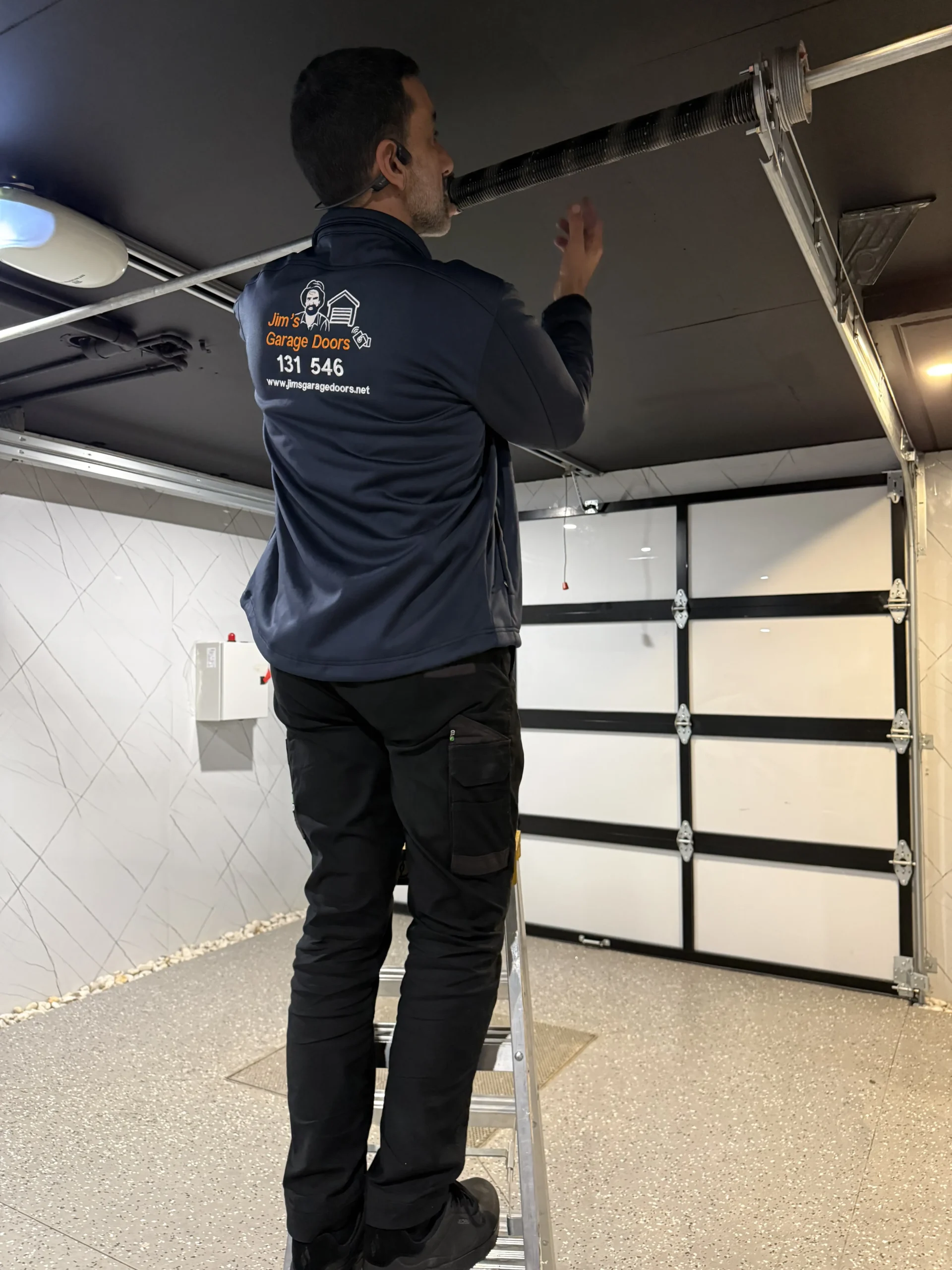
A broken garage door spring normally needs replacement rather than adjustment. The technician checks the door weight, spring type, shaft, bearings, cables and overall balance before selecting the correct replacement spring.
A broken spring often makes the opener appear faulty. Without spring assistance, the motor may be trying to lift most of the door’s weight. Continued operation can damage the opener drive, carriage or rail.
Signs of a Broken Spring
- A loud bang came from the garage
- The door feels extremely heavy
- The opener lifts the door only a short distance
- A visible gap appears in the spring
- The motor runs but the door barely moves
The opener is designed to move a balanced door, not carry the full door weight without spring support.
Can a Snapped Garage Door Cable Be Replaced?
A snapped, frayed or displaced garage door cable can be replaced after the technician checks the cable drums, springs, bottom brackets, track position and door balance. The cable fault may be the result of wear, corrosion, impact, spring imbalance or a roller leaving the track.
One failed cable often makes the door sit lower on one side because the lifting force is no longer shared evenly. That uneven load can pull rollers against the track and distort the door if operation continues.
Signs of a Cable Fault
- The door hangs crooked
- A cable looks loose, frayed or broken
- The cable has left the drum
- The door drops or jams during movement
- One side rises while the other side remains down
Can a Garage Door That Has Come Off Its Tracks Be Repaired?
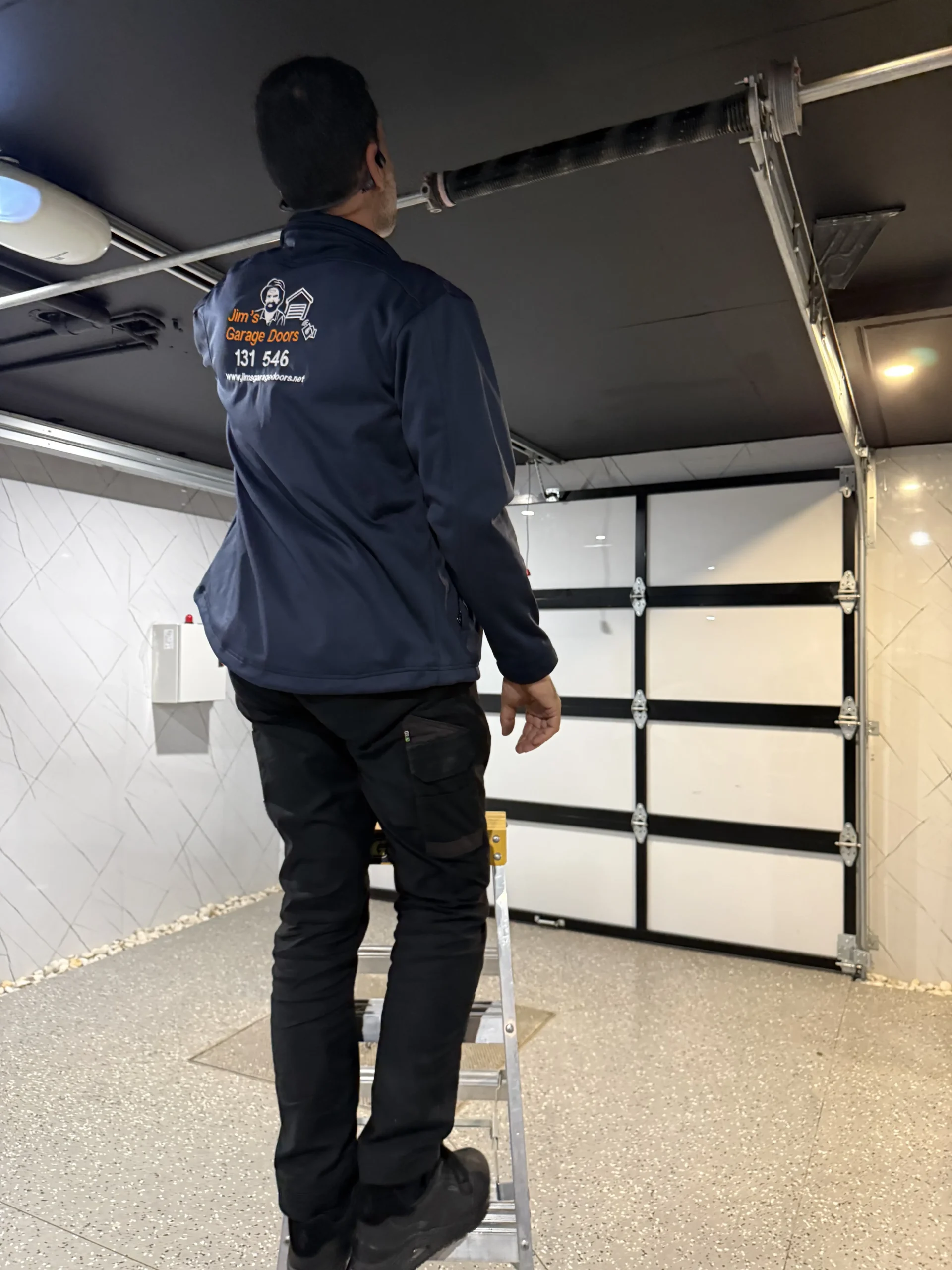
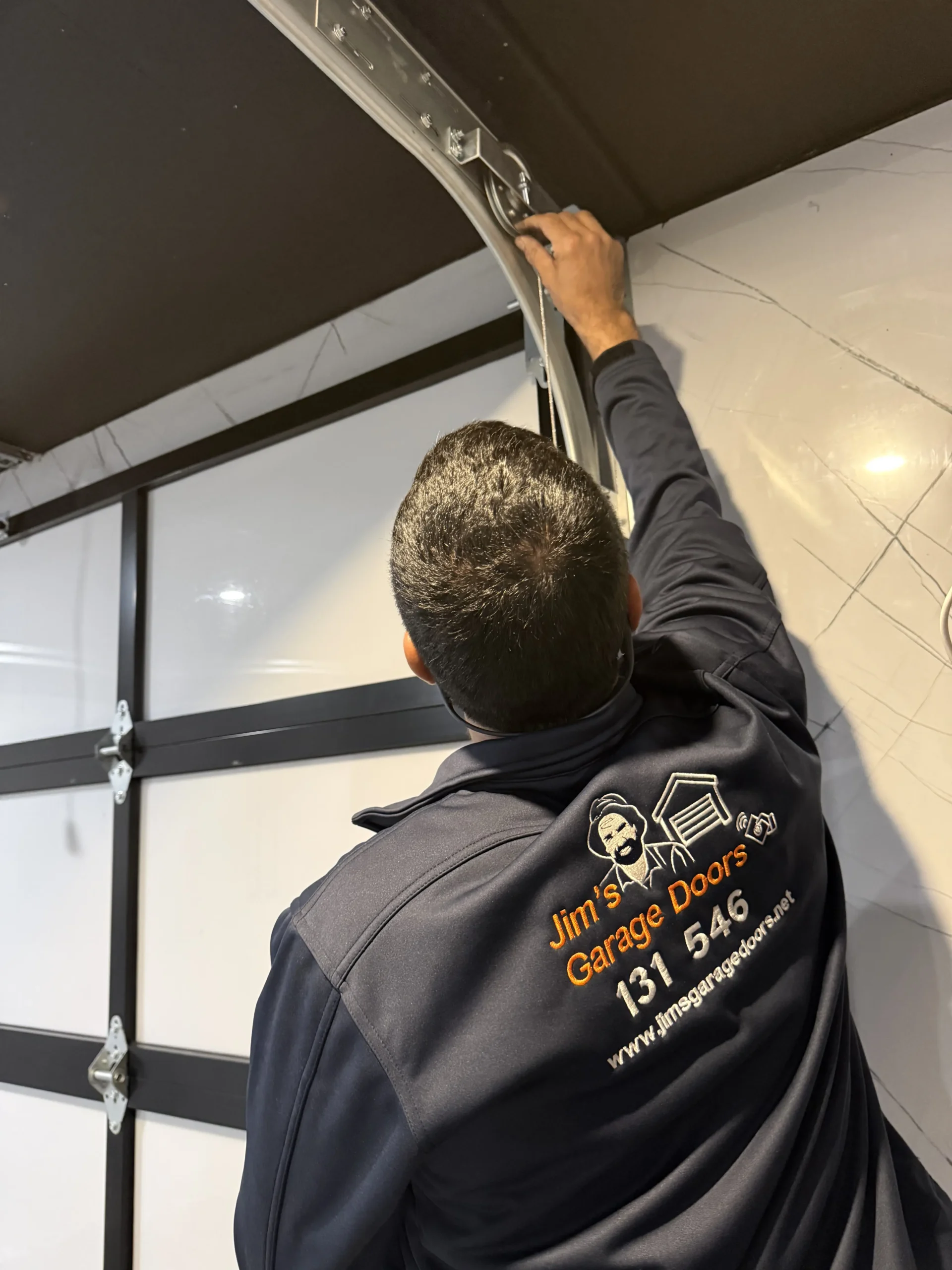
An off-track garage door may be repairable when the tracks, rollers, cables and panels have not suffered severe damage. The door must first be secured before the technician resets or replaces damaged parts.
A door can leave its tracks after an impact, cable failure, worn roller, bent track or uneven spring tension. Forcing the door can twist panels, bend tracks further and cause cables to lose their correct position.
Arrange Repair When
- A roller has left the track
- The door sits at an angle
- A track is bent or pulling away from the wall
- The door scrapes or binds in one section
- The cable has become loose after the door shifted
Can a Faulty Garage Door Motor or Opener Be Repaired?
Many garage door opener faults can be diagnosed and repaired when compatible parts remain available. The technician checks power, remotes, receivers, drive movement, travel settings, safety controls and the physical condition of the door.
A motor fault may not be the only cause. A broken spring, stiff track or damaged roller can make the opener appear faulty because the unit is attempting to move a door with excessive weight or resistance.
Common Opener Symptoms
- The motor runs but the door does not move
- The door stops before fully opening or closing
- The opener hums or makes unusual noises
- The door reverses without an obvious obstruction
- The unit responds inconsistently to controls

Why Has the Garage Door Remote Stopped Working?
A remote fault may come from a flat battery, lost coding, damaged buttons, receiver problems, power loss or an opener control-board fault. Testing the wall control and another remote can help separate a remote problem from a wider opener issue.
Remote Works Intermittently
A weak battery, worn button or radio interference may cause inconsistent response.
Wall Button Works but Remote Does Not
The likely fault is within the remote, coding or receiver communication rather than the door itself.
No Controls Operate the Door
Check power to the opener. If power is present, the receiver, control board or motor system may require inspection.
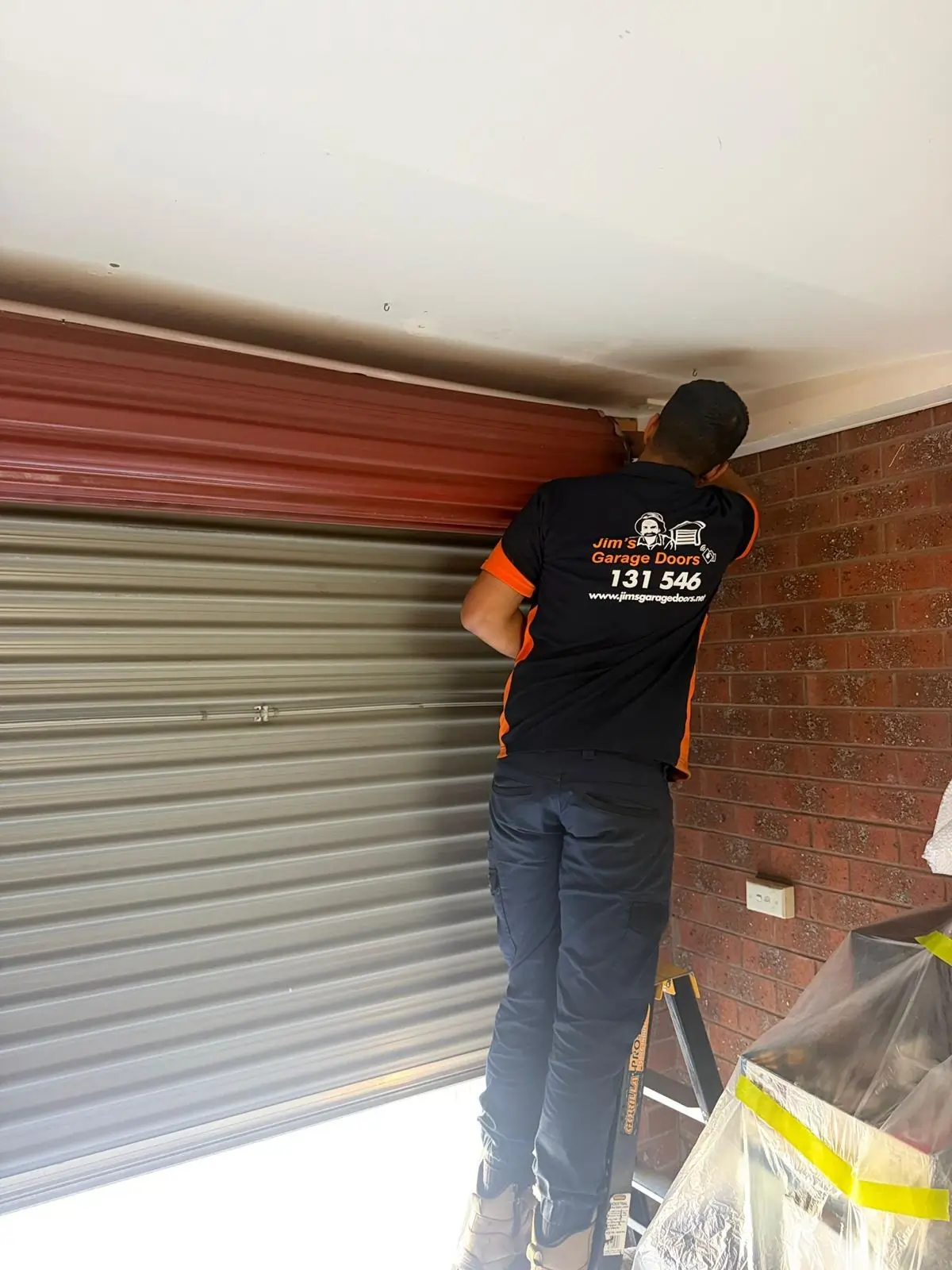
What Roller Door Problems Can Be Repaired?
Jim’s Garage Doors repairs roller doors that are stuck, noisy, hard to lift, off track or not responding to the motor. The technician checks the curtain, side tracks, axle, spring system, motor, locks and mounting points.
A roller door that becomes heavy may have a spring problem. A door that shifts sideways may have side-track, curtain or mounting damage. A motor that runs without moving the curtain may have a drive or spring-related fault.
Can Damaged Garage Door Panels Be Replaced?
Individual garage door panels can sometimes be replaced when a compatible panel remains available and the tracks, hinges and frame are still serviceable. The technician checks whether the impact has also distorted the door or affected its movement.
Panel Repair May Be Suitable When
- Damage is limited to one or two sections
- The door frame remains straight
- Tracks and hinges remain serviceable
- A matching panel is available
Full Replacement May Need Assessment When
- Several sections are badly damaged
- The door has severe twisting
- Compatible panels are no longer available
- Repair cost is high compared with replacement
Can Dents in a Garage Door Be Repaired?
Minor garage door dents can sometimes be repaired when the damage has not distorted the panel, hinges, tracks or supporting structure. Deep creases, stretched metal or a panel that has been pushed out of shape may require replacement of the affected section instead.
When Dent Repair May Be Suitable
Repair may be possible when the dent is shallow, movement remains smooth, the panel edges remain straight and the damage has not affected hinges, rollers or adjoining sections.
When Panel Replacement May Be Better
A replacement panel may need assessment when the metal is sharply creased, the panel has twisted, reinforcement has been damaged or the dent causes the door to bind during movement.
If an impact has changed the shape of the panel, the technician should also check hinges, rollers, tracks and door alignment. Continuing to operate a distorted door can transfer additional load into surrounding components.
Can Garage Door Insulation Be Added or Replaced?
Garage door insulation can be assessed for suitable doors, particularly sectional and panel garage doors. The correct approach depends on the existing panel construction, available clearance, insulation material and the additional weight placed on the door.
Existing insulation may also need attention when it becomes loose, damaged, deteriorated or no longer sits securely within the garage door panels.
Existing Door Suitability
The door construction and panel design need to be checked before insulation is added because not every garage door is suitable for the same insulation system.
Door Weight and Balance
Adding insulation increases the weight of the door. Springs and door balance may therefore need assessment so the opener is not required to lift an incorrectly balanced door.
Damaged Insulation
Loose or damaged insulation should be checked together with the surrounding panel, seals and fastening points to determine whether repair or replacement is appropriate.
Additional insulation changes door weight. Spring balance, roller movement, track clearance and opener operation should remain suitable after an insulation upgrade.
What Do Common Garage Door Symptoms Usually Mean?
The same symptom can have more than one cause, so the door and opener need to be checked as one system.
| Garage Door Symptom | Possible Cause | Likely Next Step |
|---|---|---|
| Door feels very heavy | Broken spring or incorrect spring balance | Stop using the opener |
| Door hangs crooked | Snapped cable, cable off drum or damaged track | Leave the door in place |
| Door opens only partway | Broken spring, motor overload, travel setting or resistance | Arrange diagnosis |
| Motor hums but door does not move | Door weight, drive fault, carriage fault or internal opener problem | Do not keep running the motor |
| Door closes then reverses | Obstruction, resistance, sensor issue or incorrect travel setting | Check the opening, then book service |
| Door shakes or rattles | Worn rollers, loose hinges, track movement or spring imbalance | Repair before wear spreads |
| Door scrapes or binds | Track alignment, roller, hinge or panel damage | Arrange inspection |
| Remote does not operate the door | Remote battery, coding, receiver, power or opener fault | Test controls and arrange service |
Stop operating the door when a spring has broken, a cable is loose, the door hangs crooked, a roller has left the track, the door drops suddenly, the tracks are badly damaged or the opener strains against a heavy door. Continued use can increase damage and create an uncontrolled movement risk.
How Is a Garage Door Repair Diagnosed?
The technician checks the full operating system before recommending work.
Should a Faulty Garage Door Be Repaired or Replaced?
Repair is often suitable when the main door remains sound and the fault is limited to serviceable parts. Replacement may need assessment when damage is extensive, repeated or structural.
Repair May Be Suitable When
- A spring, cable, roller or hinge has failed
- Tracks can be realigned or replaced
- The motor fault is isolated
- A compatible panel or component is available
- The door remains structurally serviceable
Replacement May Need Assessment When
- Several panels or major sections are badly damaged
- Tracks or framing have severe distortion
- Required parts are no longer available
- Corrosion affects major door components
- The door has repeated faults or no longer suits the opening

Can Garage Door Maintenance Reduce Future Breakdowns?
Regular servicing can identify worn rollers, frayed cables, loose hardware, spring wear, track movement and incorrect opener settings before a complete failure occurs.
Maintenance is particularly useful for older doors, frequently used family garages and doors that have gone long periods without inspection.
Where Are Garage Door Repairs Available?
Jim’s Garage Doors provides mobile repair services across many Australian metro and regional service areas. Availability depends on the local service area and technician schedule.
Why Choose Jim’s Garage Doors for Repairs?
Jim’s Garage Doors combines local mobile service with the systems and support of the Jim’s Group network.
Mobile Repair Service
Technicians attend homes and businesses to inspect garage door, hardware and opener faults.
Insured Franchisees
Local franchisees operate within the Jim’s Group service system and carry appropriate insurance.
Work Guarantee
Work carried out is backed under the applicable Jim’s Group service and guarantee terms.
What People Say About Jim’s Garage Doors


Garage Door Repair FAQs
What is the life expectancy of a garage door?
A garage door may last 15 to 30 years, but its service life depends on material quality, installation, use, weather exposure, impact damage and maintenance. Regular garage door maintenance can identify wear before it causes a larger failure.
What is the most common problem with garage doors?
Broken springs, worn cables, damaged rollers, misaligned tracks and garage door opener faults are common repair causes. The exact fault requires inspection because several parts can produce similar symptoms.
Can pieces of a garage door be replaced?
Yes. Individual panels, springs, cables, rollers, hinges and other parts can often be replaced when compatible parts are available. Garage panel door repair may be possible when damage is limited to one or more replaceable sections.
Can a garage door be replaced without replacing the tracks?
Sometimes. Existing tracks may be reused only when they are in suitable condition and compatible with the replacement door. Bent, damaged, incorrectly sized or incompatible tracks require replacement.
Why will my garage roller door not go up?
A roller door may remain closed because of a broken spring, damaged cable, blocked side track, curtain problem, motor fault or power issue. Do not force the door. More information about door options is available on the residential roller doors page.
Book a Garage Door Repair Inspection
Call Jim’s Garage Doors to discuss the fault or request a quote for garage door repairs in your service area.
Interested in a Jim’s Garage Doors Franchise?
View the existing franchise information pages.