

Jim’s Garage Doors provides garage door repairs in Stanmore NSW 2048 for stuck roller doors, broken springs, damaged cables, misaligned tracks, tilt door faults and automatic garage door opener problems.
A garage door that refuses to open or moves unevenly needs more than a replacement part chosen from the visible symptom. The underlying fault may involve the lifting mechanism, door alignment or opener.
Our garage door repair service includes fault assessment and suitable repair recommendations, including for older installations and garages with restricted access.
Many garage door faults can be repaired without replacing the entire door, provided the structure remains sound and compatible components are available. The repair approach depends on the door’s design and which part has failed.
A roller door that jams, scrapes or rolls unevenly may have distorted guides, a damaged curtain, worn bearings or a spring problem.
A technician checks whether the curtain enters both guides correctly and whether the drum rotates without binding. Repairs may involve guide realignment, bearing replacement or work on the spring assembly. Door travel must be checked after the repair.
A broken spring can leave a garage door too heavy to lift, while damaged lifting cables can cause uneven movement on applicable door systems.
Before replacement, the technician assesses the door’s weight, spring specifications, cable condition and related hardware. The replacement components must suit the door’s operating requirements.
If a cable has failed, its drums, attachment points and associated hardware must also be checked to determine whether another fault caused the failure.
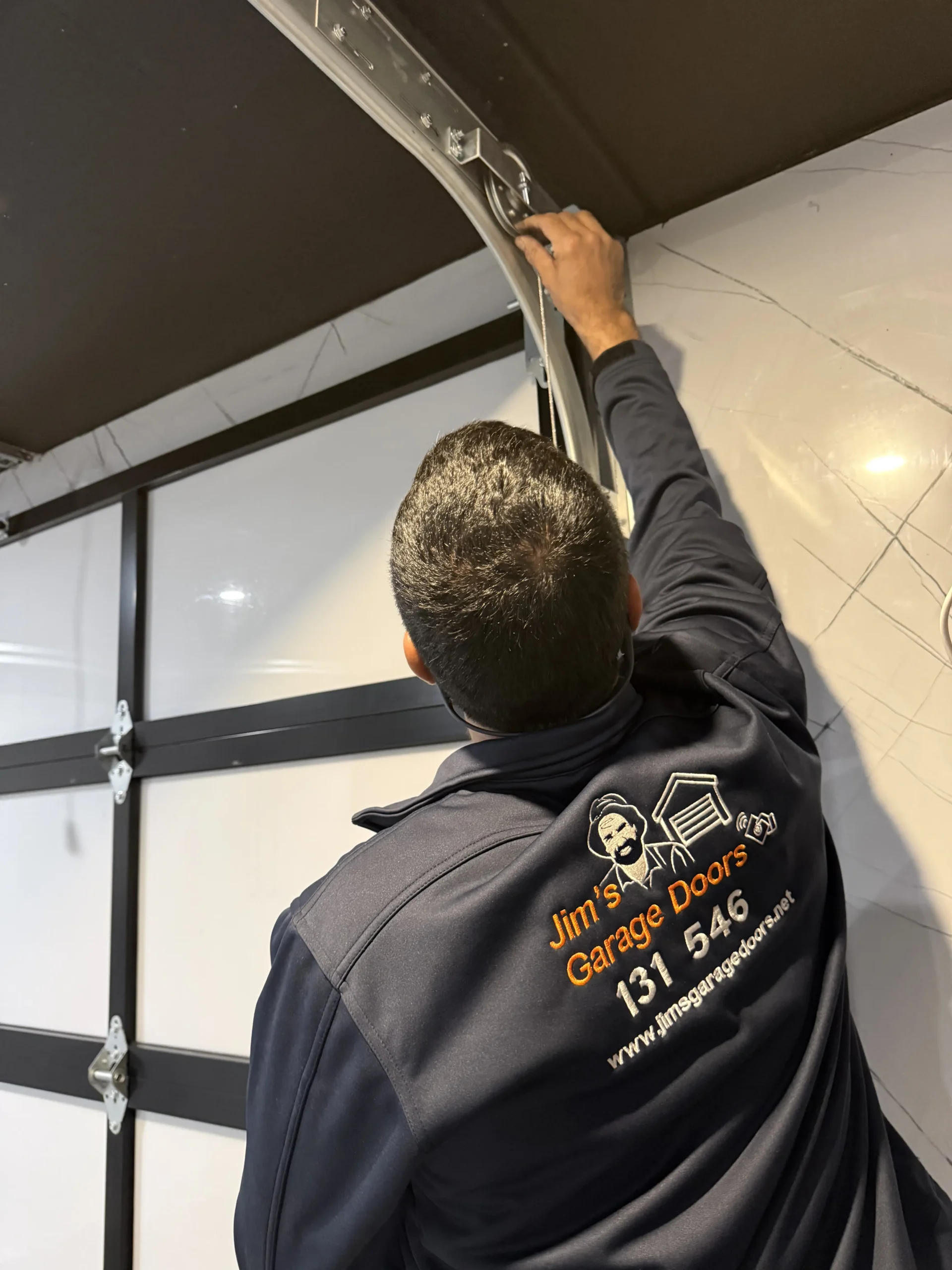
When a sectional door catches or travels unevenly, the technician looks for damaged rollers, worn hinges, displaced track brackets and panel distortion.
Tilt doors require checks around their pivot arms, spring mechanisms and supporting brackets. The repair must restore the correct movement path without creating contact with the opening or surrounding structure.
A stuck or uneven garage door can result from several mechanical faults, so replacing the first visibly damaged component may not resolve the problem. A technician starts by examining the door’s position, visible damage and lifting hardware before determining whether movement can be tested safely.
| Garage Door Symptom | What the Technician Investigates |
|---|---|
| Door lifts unevenly | Cable condition, lifting components, alignment and door distortion |
| Loud bang followed by a heavy door | Broken spring and counterbalance hardware |
| Door jams in its tracks | Roller damage, guide alignment or bent track sections |
| Door scrapes or makes grinding noises | Worn bearings, rollers, hinges or mechanical interference |
| Door stops during automatic operation | Mechanical resistance, opener drive or safety controls |
The important distinction is between the failed component and any damage it has caused elsewhere. For example, replacing a snapped cable may not restore normal operation if the door has twisted and displaced its rollers.
Do not operate a door with broken springs, loose cables or visibly uneven support. Continuing to use the opener or attempting manual release can cause uncontrolled movement.
Older garage mechanisms, limited headroom and rear-lane access can affect how a garage door is repaired in Stanmore. The main considerations are safe access to the components, compatibility with existing hardware and whether the original door can remain in service.
These conditions are relevant to certain Stanmore properties, not every garage in the suburb.
A technician first establishes whether the damaged component can be reached, removed and replaced safely within the available space.
On a roller door, the drum and spring assembly may sit close to a wall or overhead structure. A sectional door may have limited access around the torsion shaft, cable drums or track brackets.
The assessment focuses on three practical questions:
If the required clearance is unavailable, the technician must assess another safe repair arrangement rather than force a component into the existing space.
Rear-lane access can affect how a technician positions equipment, handles replacement components and establishes a safe working area.
For a roller door, removing a damaged curtain or working around the drum assembly may require space that is unavailable inside a narrow garage.
With a tilt door, the clearance needed for its outward movement and access to its supporting arms can influence the repair method.
The practical assessment considers whether the door can be supported securely, whether large components can be handled without obstructing the laneway and whether the repair area can be controlled safely.
Restricted access does not automatically justify complete door replacement. It changes how the work must be planned.
An opener that struggles to lift, stops midway or reverses does not necessarily have a defective motor. Mechanical resistance or an incorrectly balanced door may be responsible.
A technician separates the assessment into two areas.
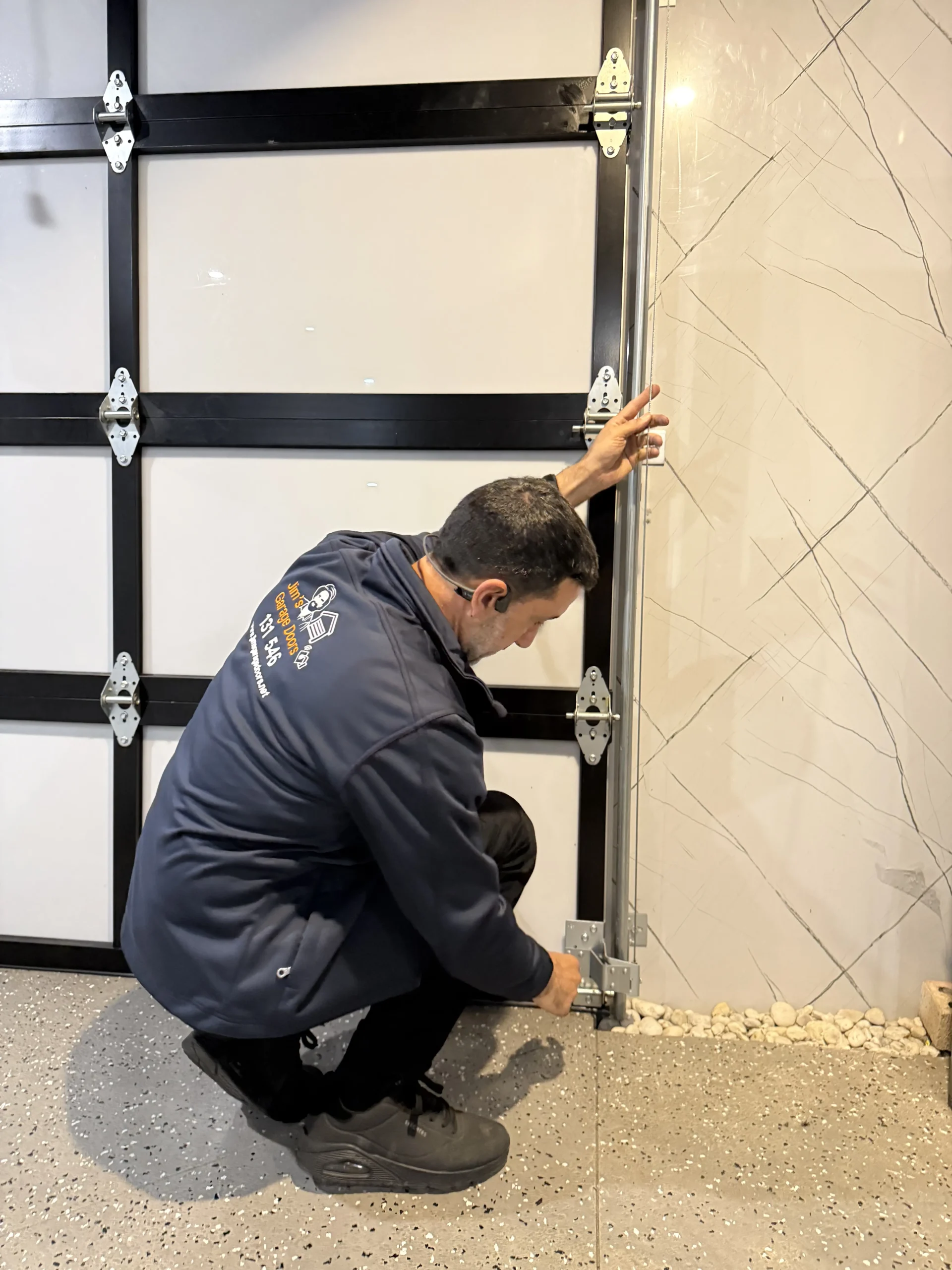
Repair is generally practical when the garage door remains structurally sound and its failed components can be replaced safely. Replacement becomes more relevant when structural damage, obsolete hardware or incompatible mechanisms make repair impractical.
Replacing springs, cables, rollers, hinges or damaged track components can restore operation when the surrounding door assembly remains serviceable.
The technician must also establish whether the original fault caused secondary damage requiring attention.
An older door with acceptable balance and structural condition may be suitable for a new automatic opener.
Before proceeding, the technician checks door weight, operating geometry, mounting clearance and opener compatibility. This may allow the existing door to remain in place without changing a restricted garage opening.
Replacement should be assessed when the curtain or panels are extensively distorted, supporting components are unsafe, or suitable repair hardware cannot be obtained.
For garages with limited clearance, the replacement must also suit the available headroom, side room, fixing points and movement path.
The decision should be based on the complete installation, not simply the age of the garage door.
Garage door repair costs depend on the confirmed fault, replacement components, labour requirements and accessibility of the installation. Two doors showing the same symptom may require different repairs. A door that will not open could have a failed spring, damaged cable, obstructed track or defective opener.
The technician’s assessment establishes the parts required, whether related components have been damaged and whether restricted access affects the repair work.
Older hardware may also influence cost if compatible components require additional sourcing or modification to the repair approach. An inspection may be necessary before providing an accurate quotation.
A garage door repair assessment should identify the underlying fault, establish a safe repair method and verify operation after the approved work.
Examine the door, lifting hardware, mounting points and visible damage before attempting movement.
Determine whether the problem involves springs, cables, tracks, door balance, opener components or controls.
Confirm suitable parts, access requirements and the repair scope before carrying out approved work.
Check door travel, mechanical balance and applicable automatic safety functions.
When booking, mention if the door is crooked, the car is trapped, or access is through a narrow rear laneway. Photographs of the door and visible damage can be helpful when taken without operating or disturbing an unsafe mechanism.
Jim’s Garage Doors provides garage door repair services across Stanmore and surrounding Inner West Sydney suburbs, including Petersham, Marrickville, Lewisham, Leichhardt and Dulwich Hill.
For broader coverage, visit Garage Door Repairs Sydney & NSW.
Potentially, depending on the fault and whether the door can be safely supported. Tell the technician that vehicle access is blocked. Do not force the door open or disengage an unstable lifting mechanism.
Not automatically. Requirements depend on the property and the proposed work. Substantial changes to the opening or external appearance may need planning consideration. Check with Inner West Council where relevant.
A minor squeak and a loud grinding or scraping noise have different implications. If the door jerks, catches, moves unevenly or shows visible damage, stop using it and arrange an inspection rather than risk further mechanical failure.
Jim’s Garage Doors provides repair assistance for stuck roller doors, broken springs, damaged cables, misaligned tracks, tilt doors and automatic opener faults in Stanmore NSW 2048.
Whether the problem involves a failed component or an older installation with restricted access, an inspection can establish the appropriate repair options.
Enter your postcode to check local technician availability. We service and repair all garage door brands.