
Jim’s Garage Doors provides garage door repairs in Summer Hill NSW 2130, including roller door repairs, broken spring replacement, cable repairs, track and roller repairs, tilt door repairs and automatic garage door opener fault diagnosis.
A garage door that becomes heavy, jams, moves unevenly or stops responding to its opener needs the underlying fault identified before parts are replaced.
The problem may involve a failed spring, damaged cable, misaligned track, worn hardware or the opener itself. Identifying the cause helps determine whether a component can be repaired or replaced without replacing the entire door.
Many garage door faults can be corrected by repairing or replacing the affected mechanical or electrical components, provided the door remains structurally sound and suitable parts are available.
The repair method depends on the door type and where the fault occurs.
Garage door springs counterbalance the weight of the door, while lifting cables on applicable door systems transfer tension to help raise and lower it.
When a spring fails, the door may become unusually heavy or stop opening. A damaged cable can cause uneven lifting or leave the door unsupported on one side.
A technician assesses the condition of the spring assembly, cables, drums and associated hardware. Before replacement, the door must be safely secured and the correct components identified. Once repaired, the counterbalance system and door movement are checked.
Spring assemblies and tensioned cables should not be adjusted or replaced without appropriate training and equipment.
Bent tracks, damaged guides, worn rollers or loose hardware can cause a garage door to scrape, jam or travel unevenly.
A technician examines the door’s position in its tracks, checks the condition of rollers and brackets, and identifies where movement is restricted. Depending on the damage, the work may involve replacing rollers, correcting track alignment or replacing damaged track sections.
The repair must restore safe movement through the door’s operating range.
Different garage door designs require different repair methods.
Roller doors require assessment of the curtain, guides, barrel and spring assembly. Sectional doors use hinged panels, rollers, tracks and counterbalance components. Tilt doors depend on their pivoting arms, springs and supporting hardware.
The technician identifies which part of the mechanism has failed before determining whether individual components can be repaired or replaced.
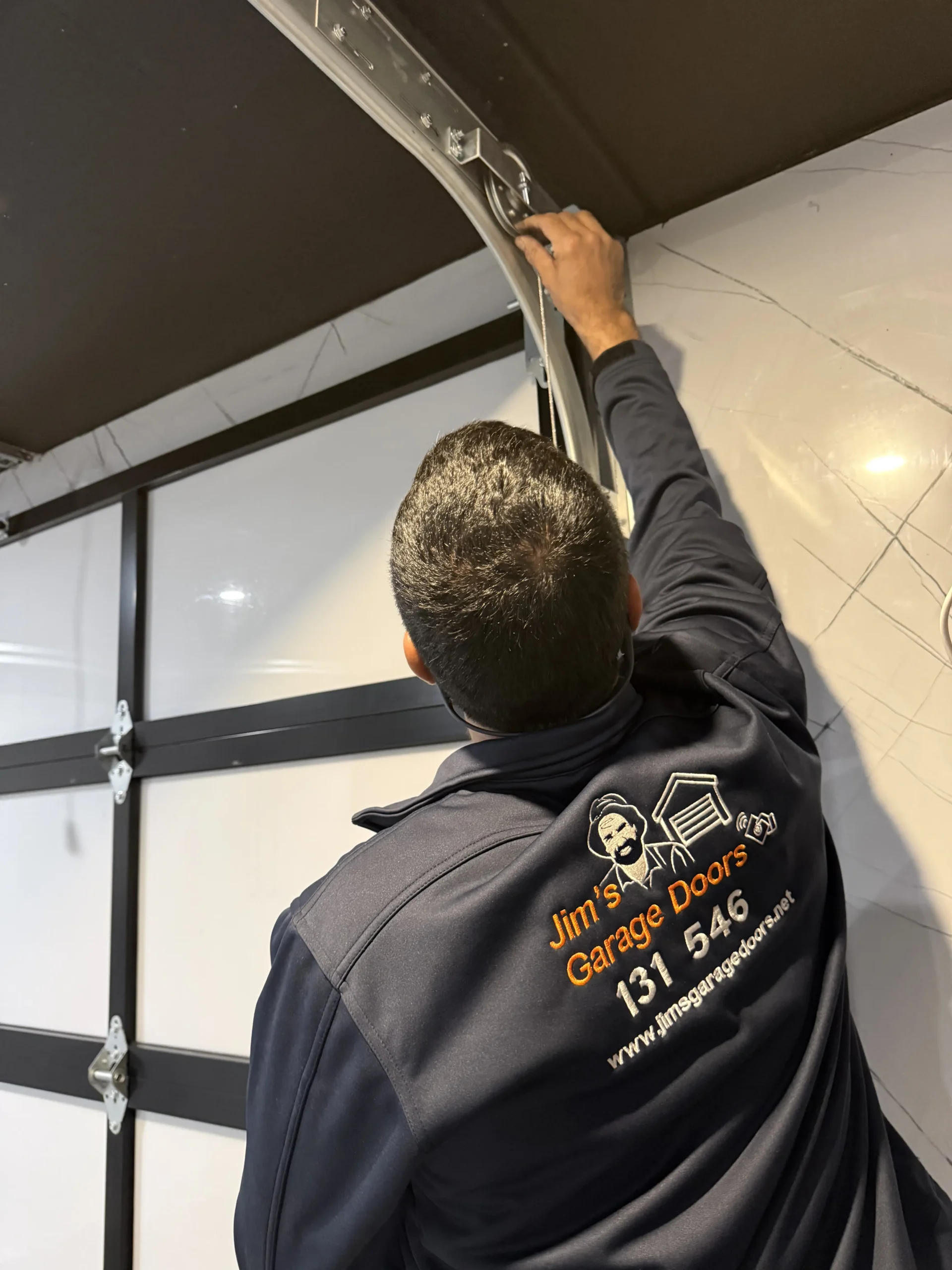
A technician diagnoses a faulty garage door by examining its position, mechanical condition and movement before deciding which components require attention.
The initial inspection looks for visible damage, broken springs, loose cables, displaced rollers, track distortion and other signs of mechanical resistance.
Where the door’s condition permits safe testing, the technician may assess balance and movement independently of the automatic opener. This helps establish whether the problem originates in the door mechanism or the motor system.
| Garage Door Symptom | What May Need Inspection |
|---|---|
| Door rises unevenly | Cables, drums, rollers and track alignment |
| Door suddenly becomes heavy | Springs and counterbalance system |
| Door jams during movement | Tracks, guides, rollers and door hardware |
| Door makes grinding or scraping noises | Rollers, hinges, guides and alignment |
| Motor operates but the door does not move | Opener engagement, drive components and mechanical door condition |
A symptom does not confirm a particular failed part. For example, an uneven door may have a cable fault, a displaced roller or a track problem.
If the door is crooked, a cable is loose, a spring is visibly broken or the door has left its tracks, stop operating it until the fault has been assessed. Repeated operation can worsen the damage or create an unsafe condition.
An automatic garage door that stops, reverses or fails to move does not necessarily require a new motor. Mechanical resistance, poor balance, opener disengagement and safety-control faults can produce similar symptoms.
A technician first assesses whether the door mechanism is in a suitable condition for safe operation.
Where safe, the door’s balance and mechanical movement may be checked separately from the opener. If the door is unusually heavy or binds in its tracks, the mechanical problem must be addressed before the opener is returned to service.
If the door mechanism operates correctly, attention turns to the opener’s drive assembly, travel settings, safety sensors, controls and motor operation.
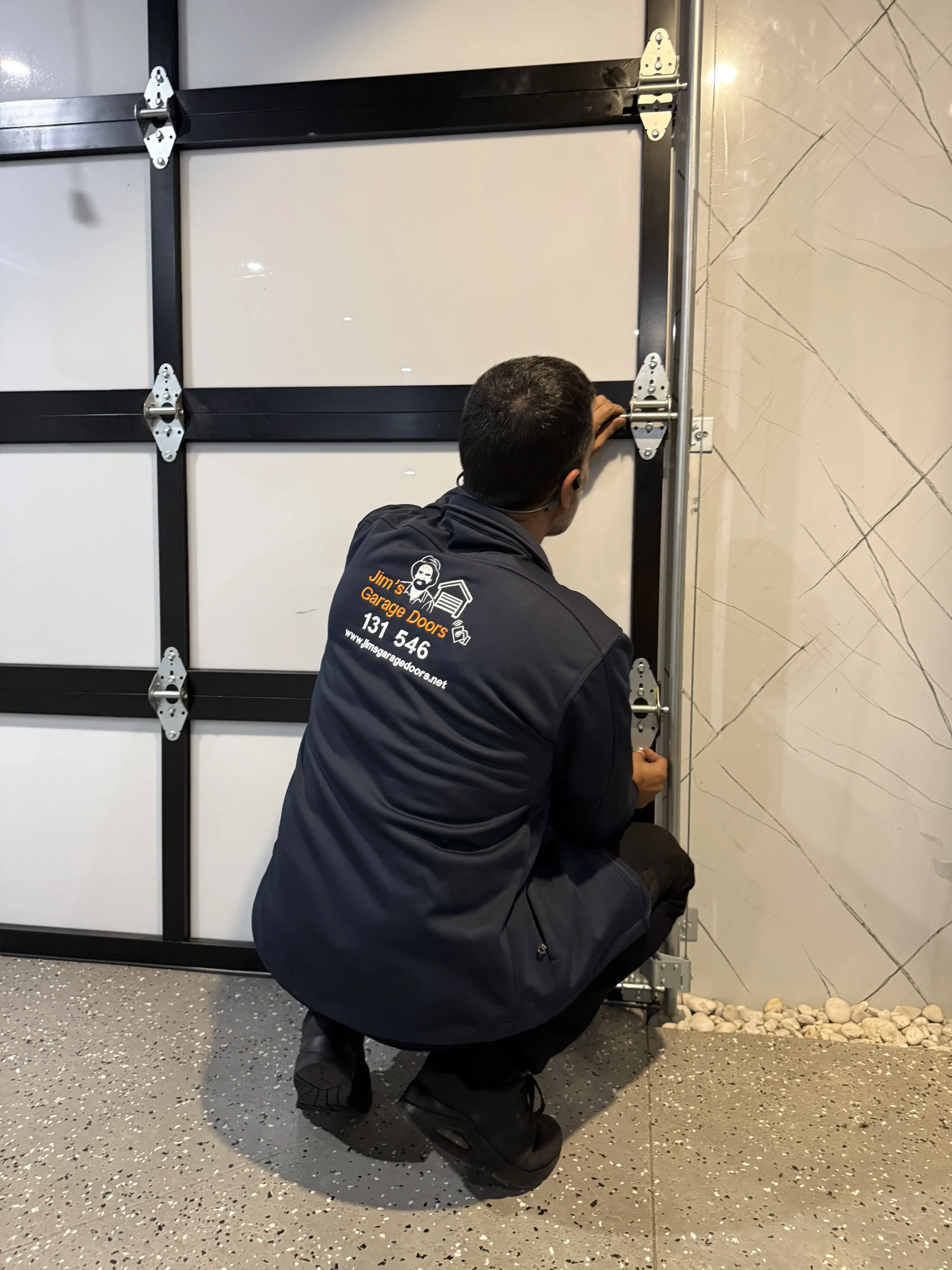
Garage door repairs in Summer Hill properties with narrow driveways, rear-lane access, limited clearance or older mechanisms may require additional assessment of access and component compatibility.
These conditions do not apply to every property, but they can affect how an otherwise straightforward repair is performed.
A garage with restricted headroom or minimal space beside the door may make it difficult to reach spring assemblies, cable drums, tracks or mounting brackets.
Before selecting the repair method, a technician needs to establish whether the affected components can be accessed and worked on safely.
A damaged component may be replaceable, but limited working space can change the equipment, labour or repair approach required.
An older roller, sectional or tilt door may contain hardware that differs from current replacement components.
The technician must establish whether suitable springs, rollers, cables, hinges or other parts are available and compatible with the existing mechanism.
Installing a part that fits physically but does not suit the door’s weight, geometry or operating requirements can create further problems.
Where compatible parts are unavailable, the technician may need to assess an alternative repair or replacement arrangement.
Some Summer Hill properties have garages accessed through narrow rear lanes.
Vehicle access, equipment handling and available working space can affect the practical repair arrangement, particularly when larger components need replacing.
Restricted access does not automatically mean that the garage door needs replacing. The decision depends on whether the existing mechanism can be repaired safely and whether the required parts can be installed and tested correctly.
Repair is generally worth considering when the door structure remains sound, the fault is confined to repairable components and suitable replacement parts are available.
For example, a sectional garage door with a failed spring may not require replacement if the panels, tracks and supporting hardware remain serviceable.
Similarly, replacing a worn roller, damaged cable or faulty opener component may restore operation without changing the complete installation.
Replacement becomes more relevant when the door has significant structural damage, critical components are unavailable or multiple defects make repair impractical.
A technician considers the condition of the door, compatibility of replacement parts, safe operation and the likely cost of the work before recommending a repair or replacement.
The age of a garage door alone is not sufficient reason to replace it.
Garage door repair costs in Summer Hill depend on the failed component, replacement parts, labour requirements, extent of damage and accessibility of the installation.
For example, replacing a worn roller is a different repair from replacing a broken counterbalance spring or correcting a damaged lifting system.
A restricted-access garage may also require additional preparation or labour to perform the work safely.
An inspection may be necessary to identify the fault and determine the appropriate repair. The quotation should reflect the required work rather than relying solely on the customer’s description of the symptom.
Jim’s Garage Doors provides garage door repair assistance in Summer Hill and surrounding Inner West Sydney suburbs, subject to service availability.
If your garage door is stuck, unusually heavy, moving unevenly or not responding to its opener, Jim’s Garage Doors can help assess the problem and determine suitable repair options.
When enquiring, describe the door type, visible fault and any access restrictions.
Enter your postcode to check local technician availability. We service and repair all garage door brands.