
Jim’s Garage Doors provides garage door repairs in Wareemba NSW 2046, including roller door repairs, broken spring replacement, cable repairs, track realignment and automatic garage door opener troubleshooting.
A garage door that is stuck, crooked or refusing to open does not always need the same repair. A broken spring, damaged lifting cable, misaligned guide or faulty opener can produce similar symptoms. The correct repair depends on identifying the failed component and checking whether it has affected other parts of the door.
Stop operating a garage door if it hangs unevenly, has a broken spring, shows loose lifting cables or has come off its tracks. These faults can affect the door’s stability and create a risk of uncontrolled movement.
A technician must establish whether the door is safe to inspect or move before attempting repairs.
| Garage Door Symptom | Possible Cause | Recommended Action |
|---|---|---|
| Door hangs crooked | Failed cable, displaced roller or track damage | Stop using the door and arrange an inspection |
| Door feels unusually heavy | Broken spring or counterbalance fault | Do not force the door open |
| Roller door jams at one height | Bent guide, damaged curtain or localised obstruction | Avoid repeated operation |
| Motor runs but door stays still | Disengaged drive, opener fault or mechanical failure | Arrange diagnosis before replacing the motor |
| Door closes and reverses | Obstruction, safety sensor, travel setting or mechanical resistance | Check for obvious obstructions from a safe position |
Do not attempt to force it closed or release the opener when the door may be unstable. Explain its position when booking so the technician can assess the immediate safety and security issue.
The same visible problem can originate from different components, so replacing the most obvious part may not fix the underlying fault. A technician must establish whether the problem involves counterbalance, alignment, friction or the opener’s drive mechanism.
One possible cause is a damaged lifting cable. The technician inspects the cable, drum, spring assembly and lifting hardware to determine why one side is no longer supported correctly. If the cable has failed, the repair may require cable replacement, correction of the cable arrangement and checks for secondary damage.
If the cables remain correctly positioned but a roller has left its track, the technician investigates roller condition, track alignment and the cause of displacement. Replacing the cables would not correct that problem.
The repair decision depends on what the inspection confirms, not simply how the homeowner describes the fault.
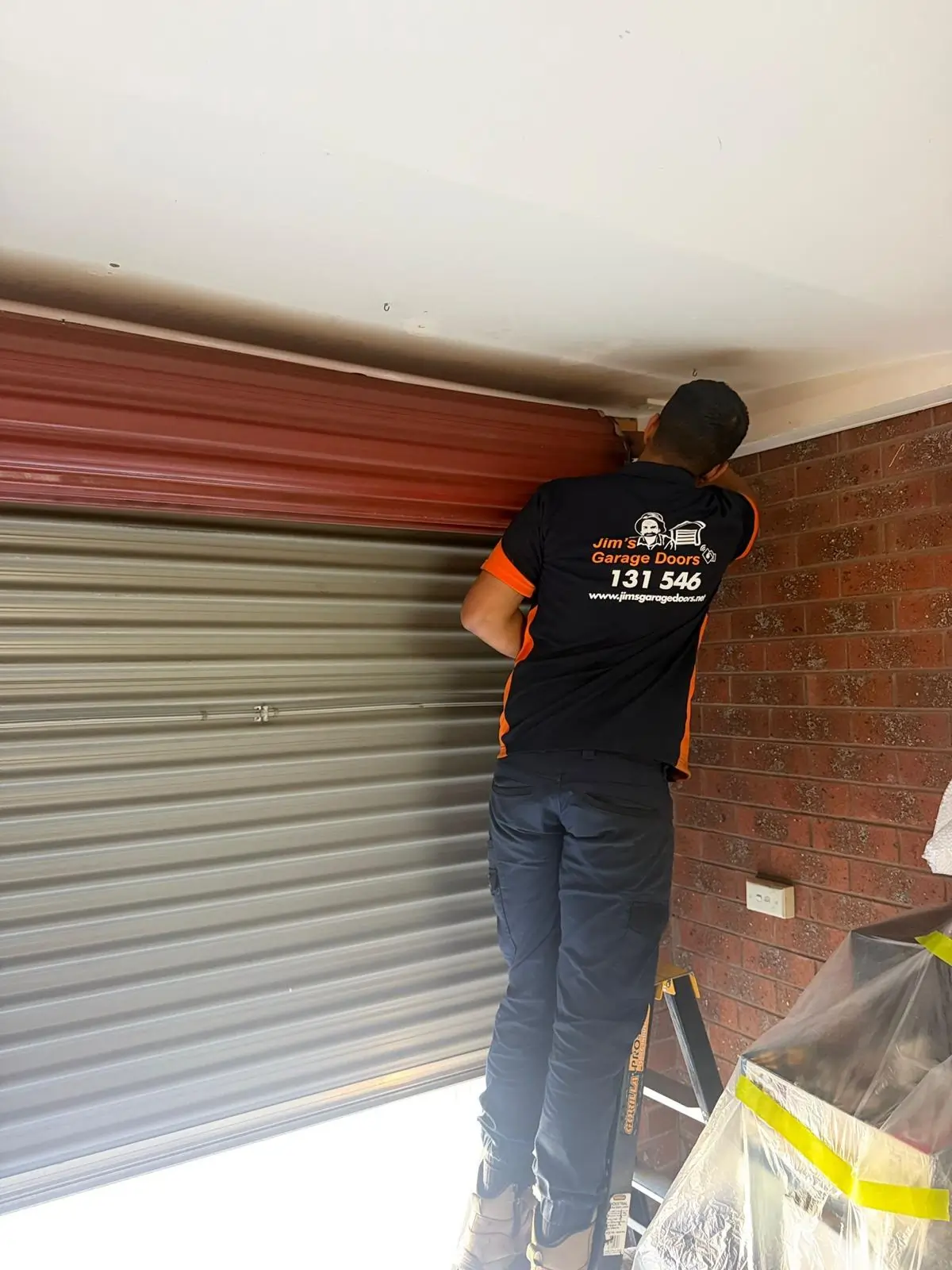
A roller garage door can often be repaired if its curtain remains serviceable and the fault is limited to the guides, axle, bearings or spring system. The technician checks how the curtain moves through the opening and winds around the axle before recommending repairs.
The technician checks curtain alignment and clearance inside both guides. A door catching at the same height can indicate a bent guide, displaced fixing or curtain-edge damage. A straight curtain may need guide correction; a buckled curtain winding unevenly may need more extensive work.
A worn bearing can increase resistance, while a spring fault can make the door excessively heavy. The technician checks the axle and mounting hardware to establish which component needs attention. Spring work requires controlled handling of stored tension.
After repair, the technician checks that the curtain enters both guides correctly and winds without shifting or binding. For an automatic roller door, the opener is assessed after correcting mechanical resistance.
Replacing the motor without repairing a jammed roller mechanism can leave the original fault unresolved.
An automatic garage door that stops, reverses or refuses to move does not necessarily have a defective motor. Springs, cables, rollers and tracks can prevent an otherwise functional opener from operating the door correctly.
Increasing motor force to overcome a damaged door mechanism is not an appropriate repair. Once the underlying fault is addressed, the opener’s travel and applicable safety functions are checked according to manufacturer requirements.
Learn more about garage door openers and automatic operation.
Older garage door mechanisms and restricted working clearances can influence which repairs are practical, even when the failed component has been identified. These considerations matter for Wareemba properties with older installations, narrow openings or limited space around the door; they do not apply to every property.
The technician evaluates the existing hardware and installation conditions rather than assuming that standard replacement parts will fit.
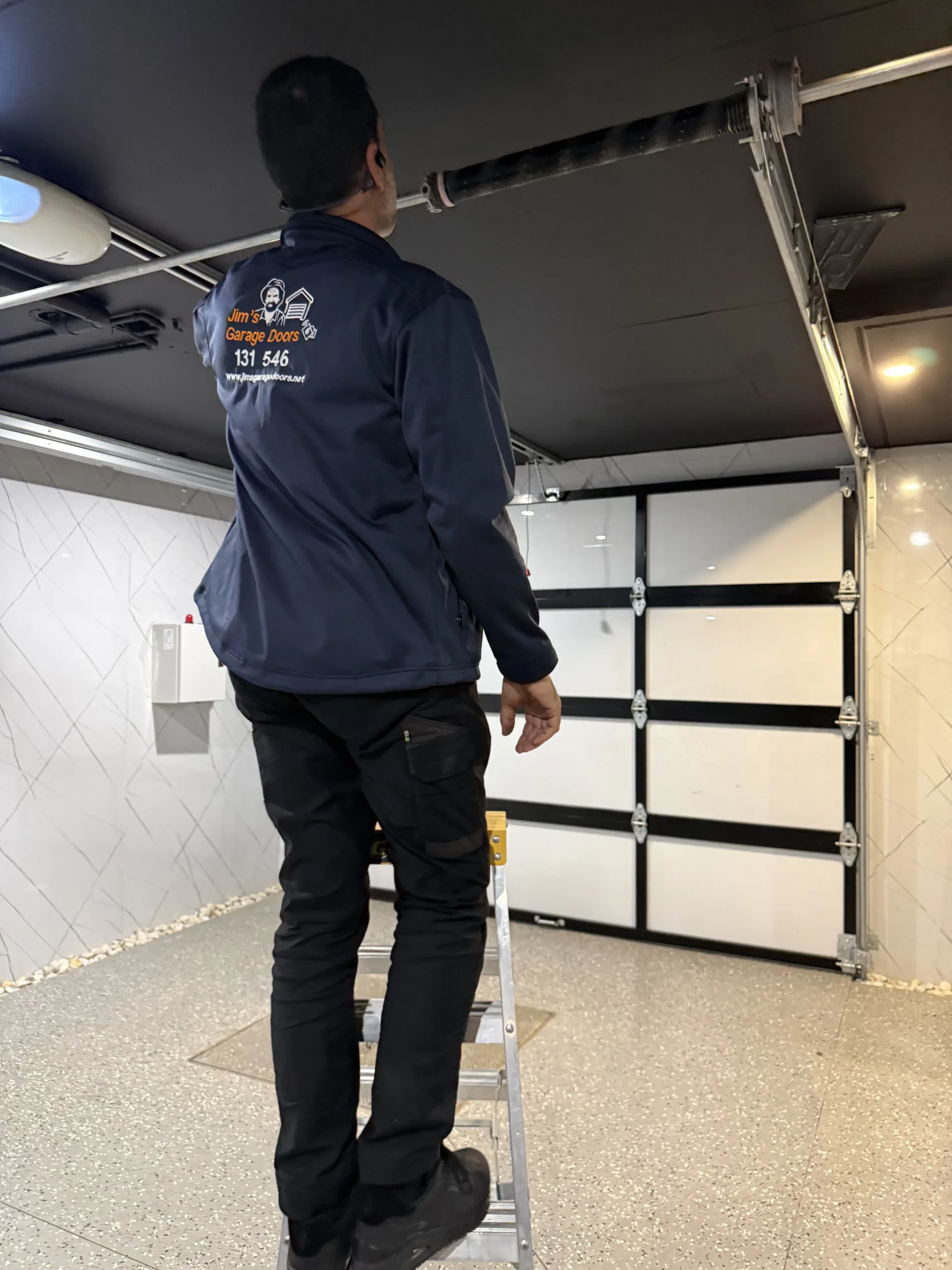
A replacement spring must suit the door’s weight, size and counterbalance design. For older roller or tilt doors, the technician checks the spring arrangement, mounting points and associated hardware.
If an original component is discontinued, an alternative must be mechanically compatible. When critical hardware cannot be matched safely, replacement may be more practical.
Restricted space beside roller door guides can prevent straightforward access to brackets and fixings. Low headroom can make it harder to reach an axle assembly or opener.
The technician checks whether parts can be accessed, removed and refitted safely. Mention if the garage has no alternative entry and its door is stuck closed.
Where corrosion is visible, the technician checks whether it is superficial or affects the strength or operation of bearings, brackets and fixings.
Moisture exposure may justify closer inspection, but corrosion should not be assumed solely because of a property’s location.
Whether the existing installation can support a safe, durable repair—not simply whether a replacement part can be made to fit.
Repair is generally worth considering when the main door structure remains sound and compatible replacement components are available. Replacement becomes more appropriate when severe damage, obsolete hardware or multiple faults compromise the practicality of restoring reliable operation.
| Condition Found During Inspection | Repair Consideration |
|---|---|
| Broken spring with otherwise sound hardware | Replace the spring with a suitable component and check the counterbalance system |
| Bent roller door guide with undamaged curtain | Repair or replace the guide and verify alignment |
| Failed opener with mechanically sound door | Consider opener repair or replacement without replacing the door |
| Severely distorted curtain or damaged door structure | Assess whether curtain or complete door replacement is necessary |
| Older mechanism with unavailable critical parts | Establish whether a suitable, safe replacement is possible |
Two roller doors may both be stuck halfway open. One could have a bent guide that can be corrected while retaining the curtain; the other could have a badly deformed curtain that cannot wind correctly even after guide adjustment.
The visible symptom is the same, but the condition of the door changes the recommendation. A technician should explain which components have failed, whether associated parts remain serviceable and why the proposed repair or replacement is suitable.
Garage door repair costs depend on the confirmed fault, required parts, labour and accessibility of the installation. The visible symptom alone is not enough to establish the total cost.
Replacing a worn roller or adjusting an accessible guide is different from repairing a spring assembly, correcting extensive track damage or sourcing compatible components for an older mechanism. Additional work may be required when one failed part has affected others or access restrictions complicate repairs.
An inspection may be necessary before providing an accurate quotation. The recommended repair should identify what needs correcting and whether associated components require attention.
Describe what the garage door is doing rather than attempting to identify the failed part yourself. The symptoms, door position and visible damage provide useful information for arranging an inspection.
Explain whether the door is roller, sectional, tilt or automatic, and whether it is fully closed, open, partly open or crooked.
Describe scraping, grinding, heavy movement, stopping or reversing. Mention visible broken springs, loose cables, damaged guides or displaced tracks, observed from a safe distance.
Provide the opener brand or model if safely visible, whether controls respond, and any limited headroom, narrow access or lack of an alternative garage entry.
Reporting that the motor operates but the roller door remains closed is more useful than simply requesting a replacement motor. Do not operate a visibly damaged door to demonstrate the problem.
Jim’s Garage Doors provides garage door repair services in Wareemba and surrounding Inner West Sydney suburbs, subject to technician availability.
Nearby service areas include Abbotsford, Five Dock, Russell Lea and Rodd Point. Customers can enquire about roller door repairs, springs, cables, tracks and automatic opener faults.
If your garage door is stuck, uneven, difficult to lift or refusing to operate automatically, Jim’s Garage Doors can assist with arranging a repair inspection in Wareemba NSW 2046.
A technician can assess the mechanism, identify the cause of the fault and determine whether repair or replacement is appropriate.
Enter your postcode to check local technician availability. We service and repair all garage door brands.